
 Rastus Hsu's Ravelry Store
 Pattern

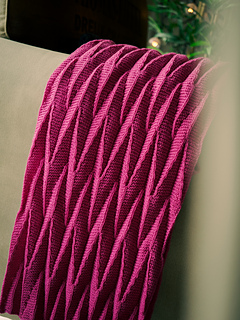
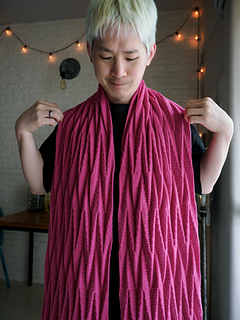
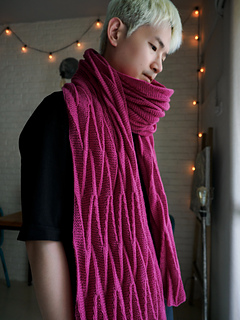
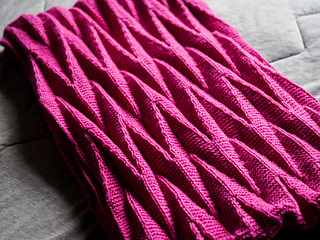


Brette

This pattern is also available at KCdesigns Create2Thrive Shop:
https://www.create2thrive.com/product-category/kcdesigns/...
TUTORIRALS
1/1 RC & 1/1 LC: https://youtu.be/KhztpGb6uoo
Inside desinger’s mind
In summer 2020, I became completely captivated by origami knitting, a technique that creates vertical and diagonal folds in knitted fabric.
What intrigued me most was how much was possible with just knit, purl, and twisted stitches. From that point on, I became fascinated by how different folding ratios could affect the fabric and its shape, and Brette was my first attempt to truly understand this remarkable technique.
NOTE: The Rose sample is knitted with So Kosho from ITO Yarn; The Goldenrod sample is knitted with Opus from A Yarn Story
SIZES
M (L)
YARN
So Kosho by Ito Yarns (90% wool, 10% cashmere, 191 yds / 175 m – 50 g).
7 (9) cones of colorway 0956 Rose.
Or approximately 1250 (1645) yds / 1145 (1505) m of DK weight yarn.
NEEDLES
US 4 / 3.5 mm 32” / 80 cm circular needles.
NOTIONS
Tapestry needle.
GAUGE
36 sts x 40 rows to 4” / 10 cm on US 4 / 3.5 mm needles in Brette Chart Pattern, after blocking, or size to obtain gauge.
Gauge Note
Block your swatch before measuring, taking care to emphasize each origami fold line. Allow to dry completely with the pleats in their natural, unflattened position. Note that gauge may vary depending on the tension of your pleats.
MEASUREMENTS
Length: 82 (89.75)” / 205 (224.5) cm.
Width: 10 (12)” / 25 (30) cm.
CONSTRUCTION
The scarf is knitted from the bottom up, flat.
A NOTE ON YARN CHOICE
Origami knitting relies on structure. The folds need to hold their shape, stay crisp, and bounce back, which means your yarn needs to work with the technique, not against it.
What I always reach for: high wool content yarns. Wool is light, resilient, and has that natural memory that keeps every pleat and fold exactly where it should be. It is the perfect partner for origami knitting.
What I would steer clear of:
— Plant fibres (cotton, linen): too little memory, the folds won’t hold
— Superwash wool: the treatment removes the memory you need
— 100% silk, cashmere, or baby alpaca: beautiful fibres, but too heavy and drapey for the structure to shine
— Anything that halos or fuzzes: it will obscure the texture and all that beautiful detail gets lost
The right yarn won’t just make your project look better, it will make the whole knitting experience more enjoyable too.


 Ravelry download


 Cancel
1461 projects
stashed 1586 times
 stashed
425 projects
stashed 400 times