

 Elizabeth Kay Booth's Ravelry Store
 Pattern


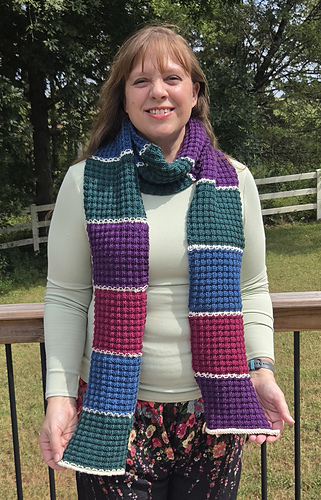
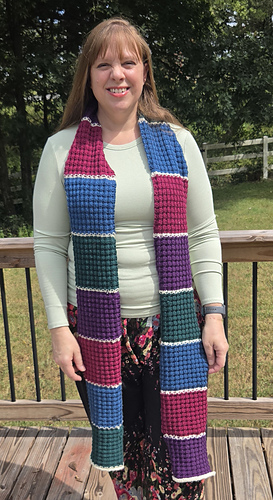
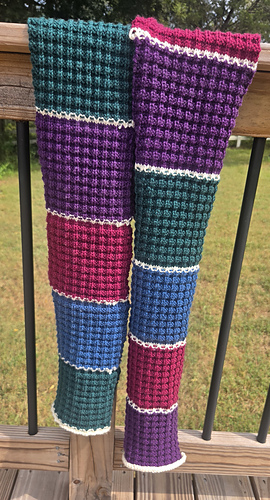
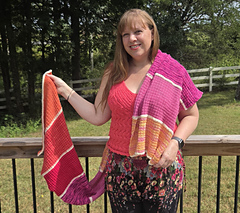
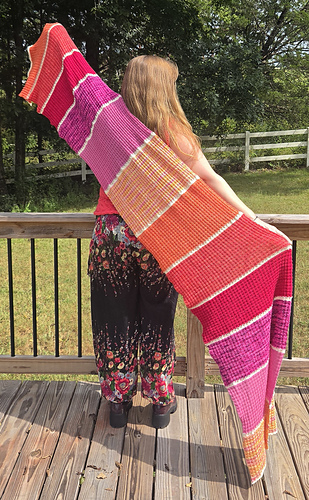
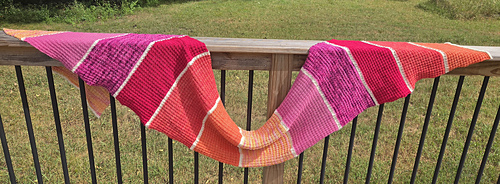
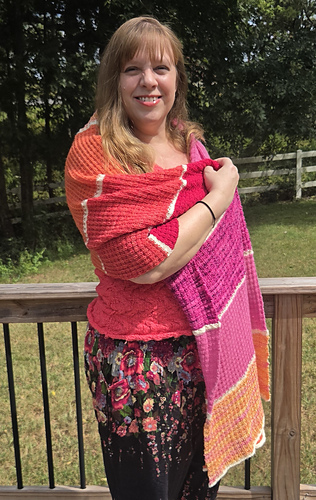
Color Variants Wrap and Scarf

This pattern is all about play! Play with yarns of different weights and play with colors. It is my hope you will have fun mixing up colors from your stash (or treat yourself to a shopping trip for whatever random skeins catch your eye!) and enjoy the knitting.
The pattern includes instructions for a worsted weight scarf and a fingering weight large wrap and features a richly textured, yet easy to memorize, stitch pattern. But these are only starting points for making your own variation! You can easily adapt this pattern to make a wrap in worsted weight or a scarf in DK. Use the options given as your guide and have fun knitting up some stash!
The wrap will need 6 different colors of fingering weight yarn - each skein around 350 - 400 yds., plus around 200 yds of a neutral color (sample is shown in white). If not using stash, a good recommended yarn is Twice Sheared Sheep Classic Sock.
The scarf will need 4 different colors of worsted weight yarn - each ball is 185 yds, plus another ball of a neutral color (sample is in white). My version features Twice Sheared Sheep Everyday Merino.
Wrap Measurements:
Approx. 17” x 84”
Gauge: 25 sts x 42 rows = 4”
Scarf Measurements:
Approx. 6 1/2” x 86”
Gauge: 22 sts x 32 rows = 4”
Choosing colors is the other fun part of this design. My samples are designed to give you an idea of different ways to play. My wrap sample is knit from stash yarns to create a gradation of warm colors, and the scarf is using a fall palette that is coordinated, but not a gradation. A few other options include using your random variegated skeins and making each color section a different color with no repeats at all, or choosing just two colors to alternate. You could also go through your stash and pull all your yarns that fall into the one color category such as blues and make a monochromatic version. Just choose a neutral color to use between the color blocks to keep some contrast.


 Ravelry download


 Cancel
126 projects
stashed 172 times
 stashed
32 projects
stashed 103 times