

 eri shimizu
 Pattern


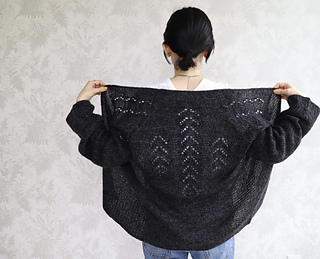
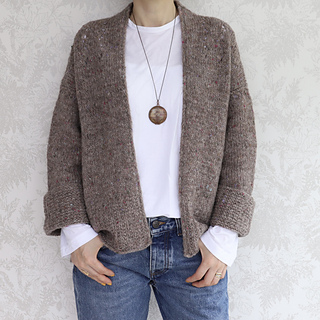
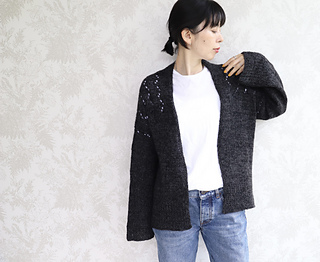
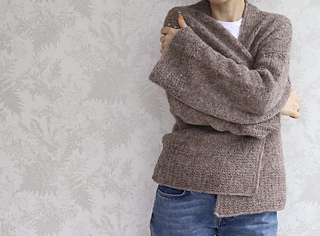
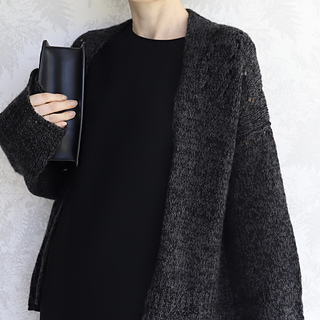

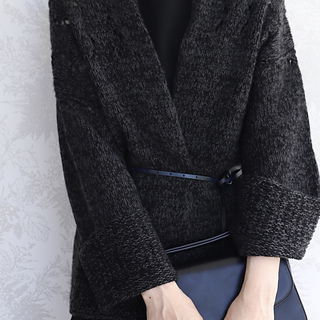
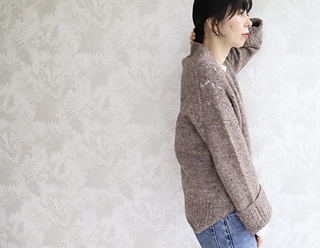
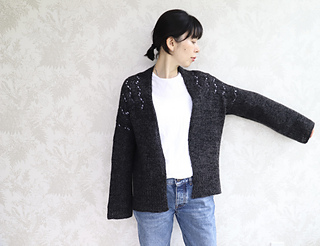
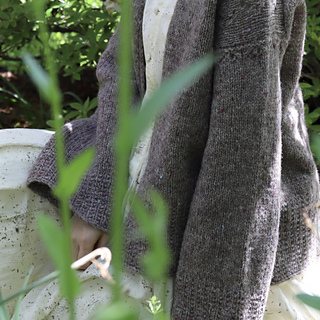
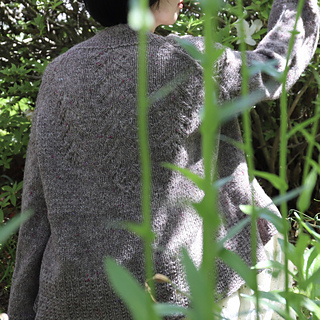
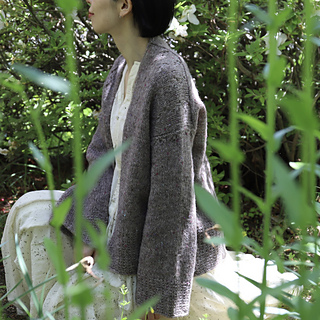
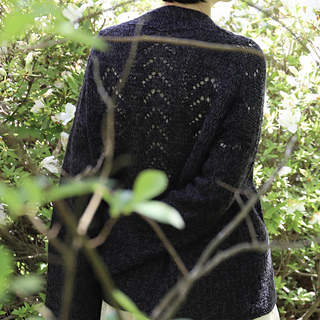
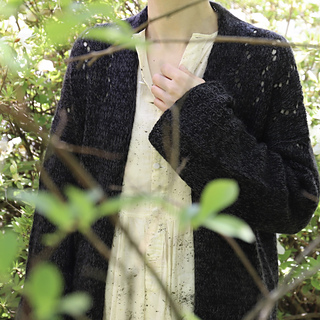


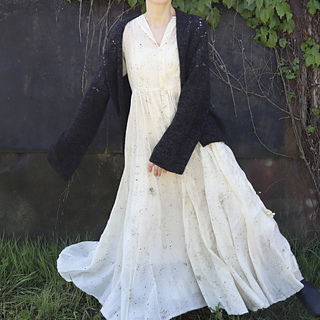
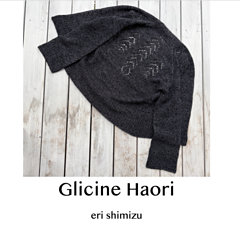
Glicine Haori

SIZES: 1 (2, 3, 4, 5) (6, 7, 8, 9)
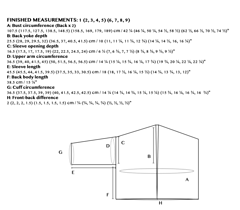
Finished bust (Back x 2): 107.5 (117.5, 127.5, 138.5, 148.5) (158.5, 169, 179, 189) cm / 42 ¼ (46 ¼, 50 ¼, 54 ½, 58 ½) (62 ½, 66 ½, 70 ½, 74 ½)”
Suggested ease: 20-31 cm / 7 ¾-12 ¼” of positive ease.
Shown in size 1 with 31.5 cm / 12 ½” positive ease
YARN
SAMPLE 1 - Black x Grey
Nomadnoos High mountain yak (100% yak - 340-375 m / 371-410 yards per 50 g)
No stars this evening (black) 3 (3, 4, 4, 4) (4, 5, 5, 5) skeins
Stones on the beach (dark grey) 3 (3, 4, 4, 4) (4, 5, 5, 5) skeins
Or each color approximately 910 (1005, 1065, 1125, 1210) (1335, 1400, 1515, 1580) m / 990 (1095, 1165, 1230, 1325) (1465, 1530, 1655, 1725) yards of light fingering yarn
SAMPLE 2 - Brown
Lanivendole Bottoni Unspun (100% Italian wool - 100 g / 1 set = 2 x 50 g ball) color Bosco 3 (4, 4, 4, 4) (4, 5, 5, 5) sets
Since this yarn breaks easily, I recommend not pulling it while knitting. Instead, gently unwind it from the outside of the ball little by little as you work. If the yarn does break, continue knitting by overlapping the ends. Also, because the yarn is sensitive to friction in its original state, I suggest weaving in the ends as you go, such as after CO.
NEEDLE
4.5 mm / US 7 circular needle, 60 cm / 24” or longer for body, hem, sleeves and cuffs
Adjust needle size if necessary to obtain the correct gauge.
GAUGE
After blocking
16 sts and 23 rows/rnds = 10 cm / 4” in Stockinette stitch, with 4.5 mm / US 7 needle
15 sts and 24 rows = 10 cm / 4” in chart A (Sizes 1, 2 & 3) pattern, with 4.5 mm / US 7 needle
NOTIONS
Stitch markers (9-13), tapestry needle, safety pins or removable markers, waste yarn, spare circular needles (4.5 mm / US 7)
NOTE
Glicine starts from the back neck and is worked down to the underarm. Then, stitches are picked up along the cast-on edge of the back for the right and left fronts, and they are separately worked up toward the shoulders, then down to the underarm. Then, the front and back are joined and worked flat down to the hem in one piece. Sleeve stitches are picked up around the arm opening and worked in the round to the cuff. You can wear it with the cuffs folded to enjoy the stitches’ nuance.
‘Glicine’ means wisteria in Italian, and ‘Haori’ refers to a traditional Japanese jacket.
Thank you for helping me:
Dear Akiko, Maki, Reiko, Sonoka and Yumiko
fil https://atelierfil.com/
KASITOO https://www.studiokasitoo.net/
strands of life https://strandsoflife.com/translation/
Nomadnoos https://nomadnoos.com/?v=24d22e03afb2
Lanivendole https://lanivendole.com/en/
#glicinehaori on Instagram


 Ravelry download


 Cancel

157 projects
stashed 133 times
 stashed
10 projects
stashed 20 times


