

 Woolen Cottage's Ravelry Store
 Pattern

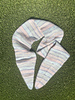
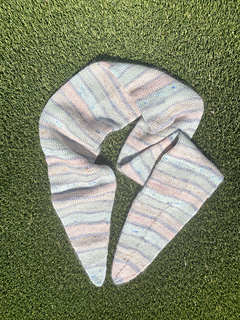
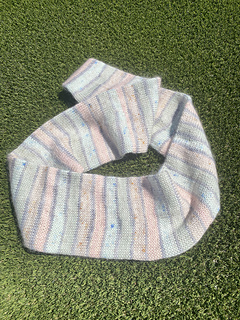
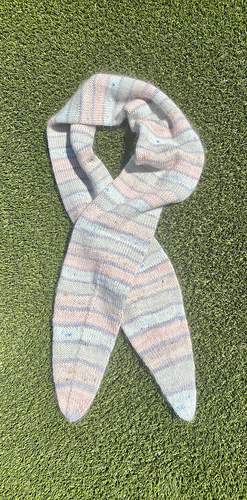
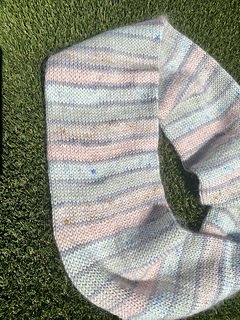
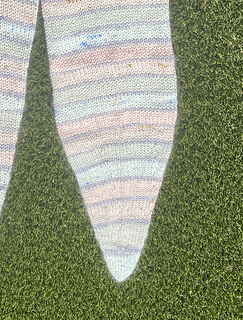
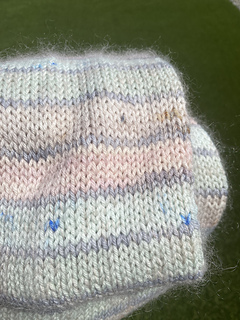
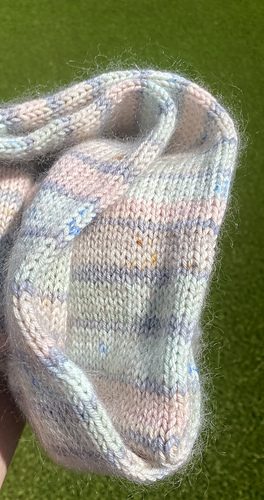
Happy Halo Scarf

Find a happy DK yarn and give it a Halo with some Mohair!
CONSTRUCTION
- tube scarf design, worked in the round
- start with simple, staggered increases
- knit around and around for the main section
- end with matching, simple decreases
THE YARNS
Both yarns are held throughout - 600yds or more is required of each yarn you choose.
Self-Striping DK as the main color, with a coordinating or contrasting Mohair/Silk to add the fun, fuzzy Halo effect
Recommended yarn:
2 skeins Must Stash Everyday DK - I chose color Daily Eggs
3 balls Knitting for Olive Soft Silk Mohair - I chose color Powder
Make this a scrappy project, or play with variegated or speckled yarns. The halo effect can blend in or change the main color yarn depending on the color you choose.
NEEDLES & GAUGE
The cone-shaped ends are a fun feature. At each end you’ll work with just a few stitches, MagicLoop technique or DPNs are needed.
The main body can be knit on a 16” (40cm) circular.
It’s a scarf! No need to stress too much on gauge here.
SIZE OPTIONS
I like a 6 inch (15cm) wide scarf when made tube-style. It’s double thick material already, so I don’t find it needs to be wider.
Knit as long as you like. 6 feet is good for me and most adult heights. It can be worn single thickness draped around the neck, or wrapped around once and still have enough length without getting in the way.
Kid size? I get asked this a lot… Yes, this is easily adapted to humans of any size. Just adjust yarn quantities as needed. The pattern can easily be adjusted for width too, just start the main body section at whatever width you’d like.
TECHNIQUES
Knitting in the round with a small number of stitches
DPNs or MagicLoop, or other small circumference method options
Simple increases
Simple decreases
Weaving in ends
Grafting (tutorial link included)


 Ravelry download


 Cancel
55332 projects
stashed 28911 times
 stashed
241 projects
stashed 313 times