

 Ferdigstrikka (website)
 Pattern

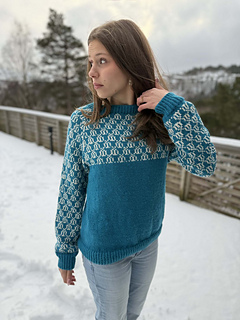
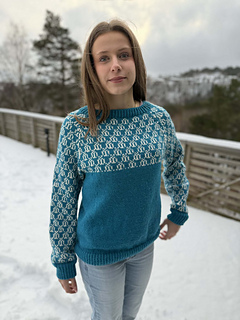
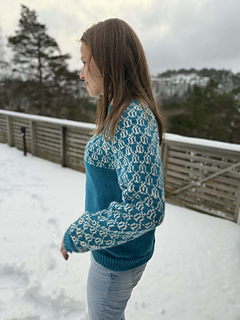
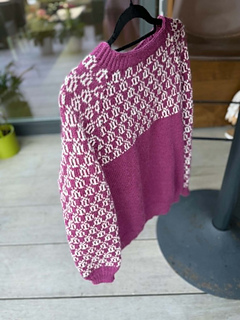
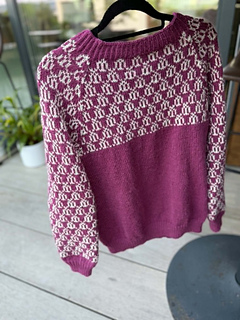
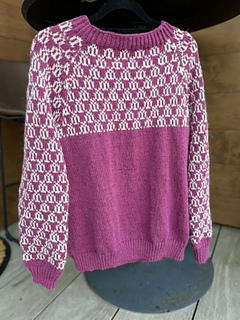
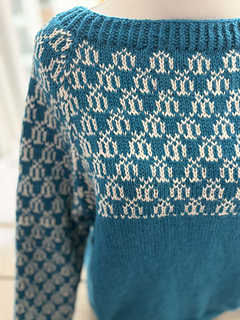
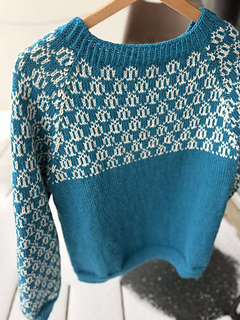
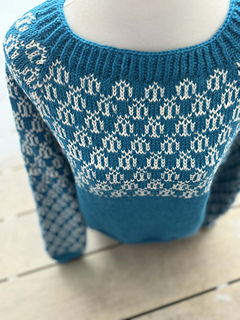
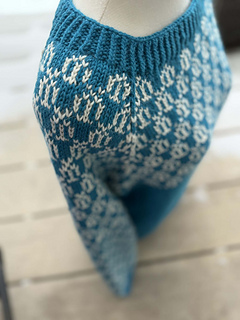
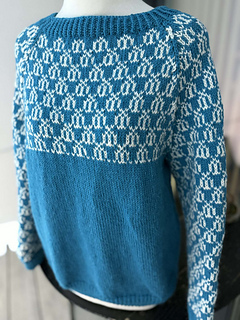
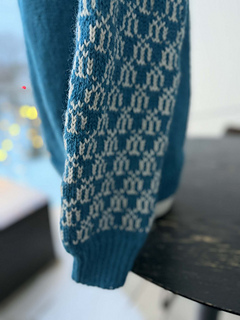
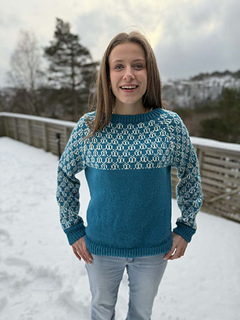
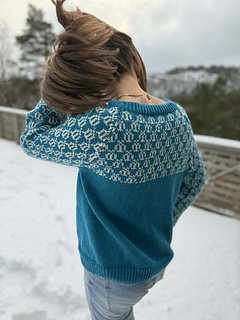
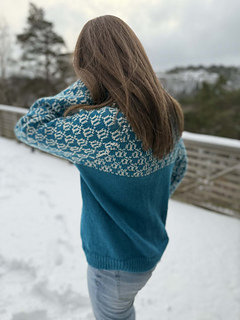
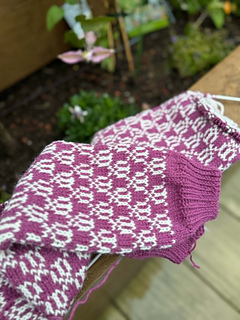
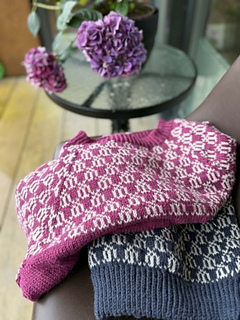
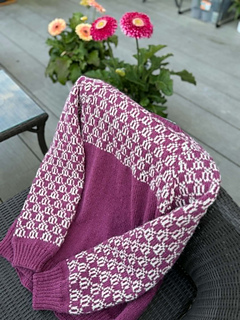
Hattholmen sweater 3


Hattholmen sweater 3 with raglan in Viking Alpaca Storm. The Hattholmen sweater can be knitted either bottom-up or top-down, and patterns are provided for both methods. The sweater shown in the images is size M, knitted bottom-up. Hattholmen is a small lighthouse off the coast, and the colourwork is inspired by the play of light and shadows found there.
Sizes
XS (S) M (L) XL (2XL) 3XL
Measurements
Bust circumference: 84 (91) 98 (106) 113 (120) 127 cm
Full length: 58 (59) 61 (63) 68 (70) 71 cm
Sleeve length: 43 (44) 46 (47) 48 (48) 49 cm
Neck circumference: 51 (53) 53 (55) 55 (56) 57 cm
Gauge
22 stitches x 24 rows in colourwork pattern on 4 mm needles = 10 x 10 cm
NOTE: Needle size is only a guide. If you get too many stitches on 10 cm, change to a larger needle size. If you get too few stitches on 10 cm, change to a smaller needle size.
Needles
Double-pointed needles and circular needles (40 cm) size 3 mm
Circular needles (40 and 80 cm) size 4 mm
Yarn and Yarn Amounts Viking Alpaca Storm, 40% superfine alpaca, 40% merino wool, 20% nylon, yardage per skein: 50 g = 133 m
Colour 530 Turquise 350 (400) 400 (400) 450 (450) 450 g
Colour 502 Natural, 150 (150) 150 (150) 200 (200) 200 g
Alternative yarn: Alpakka wool form DSA and Lace Kid Mohair from Gjesdal garn.
Knitting the sweater in 2 ways:
BOTTOM-UP VERSION
This version begins with the body, followed by the sleeves. All pieces are then joined together, and the raglan yoke is worked. The sweater is finished with the neckline.
The Hattholmen sweater is knitted from the bottom up. It is worked in the round, which means that instead of knitting back and forth in rows, you will work in continuous circles, creating a seamless garment. This method eliminates the need for side seams and gives the sweater a smooth, even finish.


 Ravelry download


 Cancel
1601 projects
stashed 1137 times
 stashed