

 Tanja Manz's Ravelry Store
 Pattern



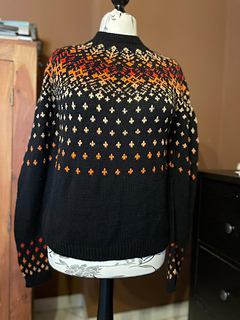
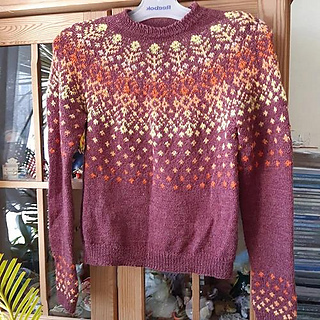
Herbstleuchten

bis zum 19.10.26 gibt es 20 % Rabatt auf die Anleitung ohne Code.
Zur Anleitung:
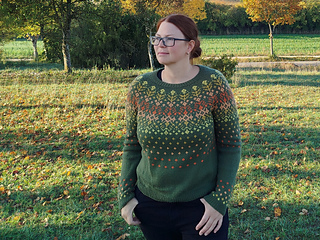
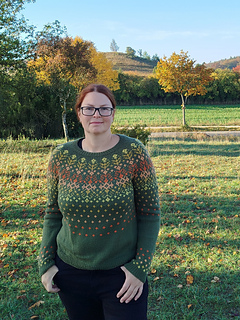
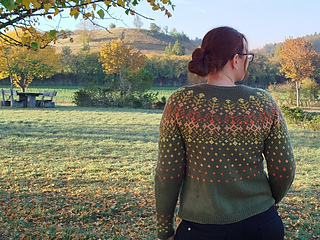
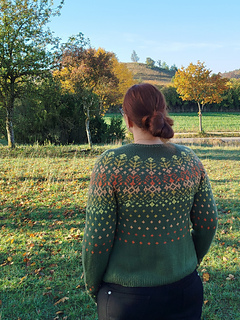
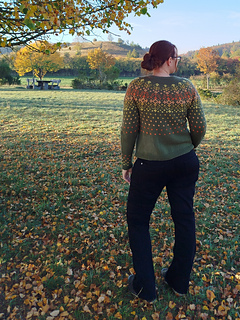
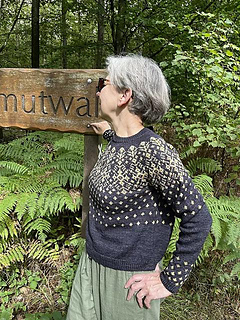
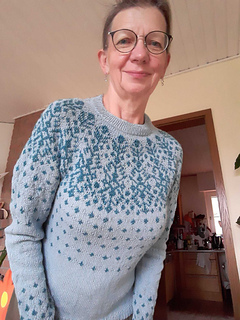
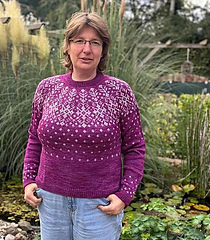
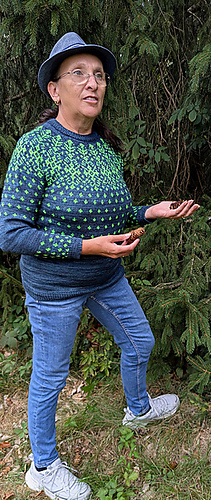
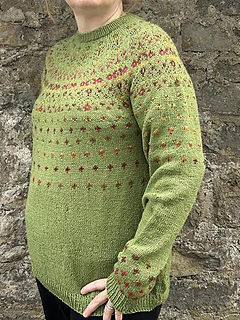
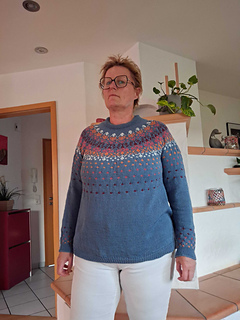
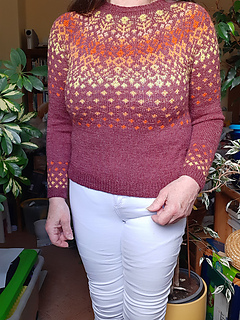
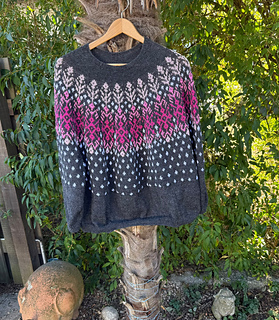
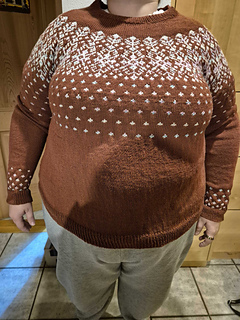
Dieser schöne Pullover wird von oben nach unten und mit verkürzten Reihen im Nacken gearbeitet.
Das Muster wird im Colorwork mit 2 ¬¬¬oder mehr Farben gestrickt.
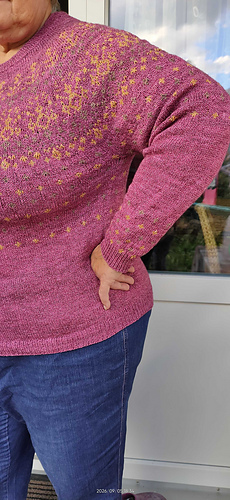
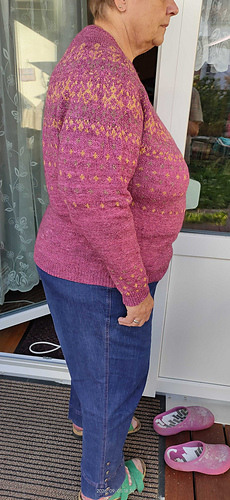
Für die Aufteilung der Körpermaschen beim Stilllegen der Ärmel gibt es eine extra Option für Frauen mit größerer Oberweite, dazu gibt es ein gesondertes Video.
Die Anleitung enthält englische Abkürzungen mit deutschen Erklärungen.
Der abgebildete Pullover wurde in Größe 5 gestrickt mit 6 cm Mehrweite im Brustumfang.
Beim Stilllegen der Ärmel wurde bei der Aufteilung für die Körpermaschen die Option für eine
größere Oberweite gestrickt (Schritt 5.2).
Die Ärmel wurden mit einer kleineren Nadelstärke gestrickt, um einen geringeren Ärmelumfang zu erreichen.
Für die Kontrastfarbe wurden 4 verschiedene Farben verwendet.
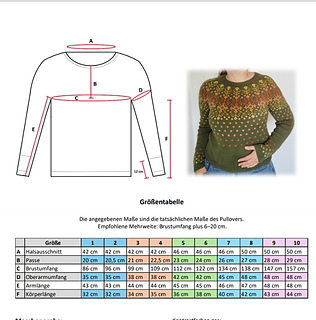
Größen
1 bis 10 siehe Bild
Material:
Jedes Garn, das zur Maschenprobe passt.
Für weniger geübte Colorwork-Strickerinnen empfehle ich ein etwas robusteres Garn, das sich beim Stricken verhakt.
Hauptfarbe:
280/ 300/ 320/ 350/ 370/ 400/
450/ 480/ 550/ 600 g
980/ 1050/ 1120/ 1225/ 1300/ 1400/
1575/ 1680/ 1925/ 2100 m
Kontrastfarben ges:
50/ 55/ 58/ 60/ 65/ 70/ 80/ 85/ 90/ 100 g
175/ 190/ 200/ 210/ 230/ 245/
280/ 300/ 315/ 350 m
Der Verbrauch kann je nach Garn variieren.
Rundstricknadel 3,0 mm, 40‒120 cm Seil
Rundstricknadel 3,5 mm, 40‒120 cm Seil
Eventuell ein Nadelspiel in 3,5 mm
und 3,0 mm für die Ärmel
1 Rundenmarkierer
Schere und Nadel zum Vernähen
About the Pattern
This beautiful sweater is worked seamlessly from the top down, with short rows used to shape the back neck.
The colourwork pattern is worked using two or more colours.
For dividing the body stitches when placing the sleeve stitches on hold, an additional option is included for knitters with a fuller bust. A separate video tutorial is provided to demonstrate this technique (in German).
The sample sweater shown was knitted in Size 5 with 6 cm of positive ease at the bust. When placing the sleeve stitches on hold, the fuller-bust option was used for dividing the body stitches (Step 5.2).
The sleeves were worked using a smaller needle size to achieve a narrower sleeve circumference.
Four different colours were used for the contrast colours.
Materials:
Any yarn that matches the required materials.
For less experienced colourwork knitters, I recommend a slightly more robust, grippier yarn (for example a non-superwash yarn) that catches on itself while knitting.
Main Colour:
280/ 300/ 320/ 350/ 370/ 400/
450/ 480/ 550/ 600 g
980/ 1050/ 1120/ 1225/ 1300/ 1400/
1575/ 1680/ 1925/ 2100 m
Contrast Colours:
50/ 55/ 58/ 60/ 65/ 70/ 80/ 85/ 90/ 100 g
175/ 190/ 200/ 210/ 230/ 245/
280/ 300/ 315/ 350 m
Yarn usage may vary depending on the yarn.
Circular needles 3.0 mm, 40–120 cm cable
Circular needles 3.5 mm, 40–120 cm cable
Optional: double-pointed needles (DPNs) in
3.0 mm and 3.5 mm for the sleeves
1 round marker
Scissors and a darning needle for weaving in ends


 Ravelry download


 Cancel

2835 projects
stashed 1733 times
 stashed


