

 Zaneteknits
 Pattern


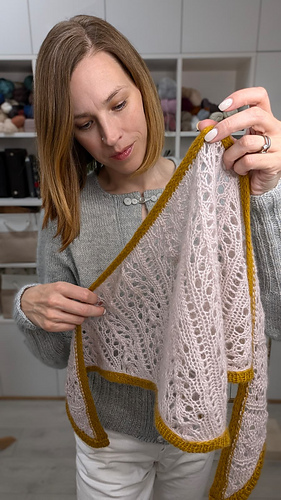
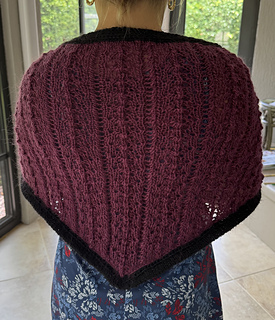
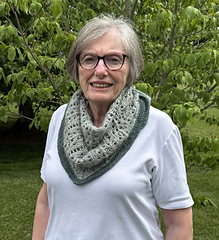

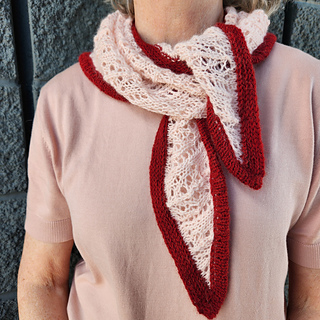
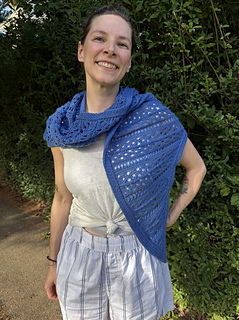
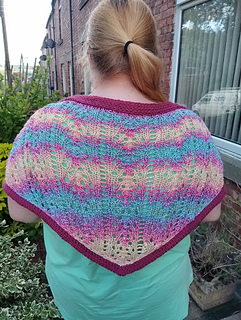
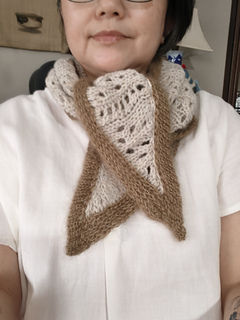
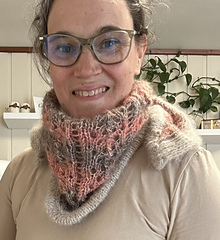
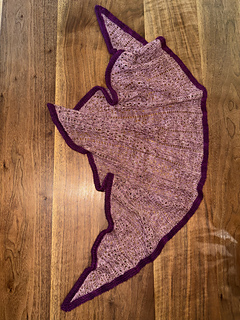
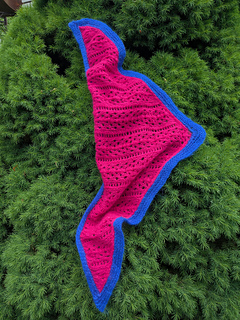
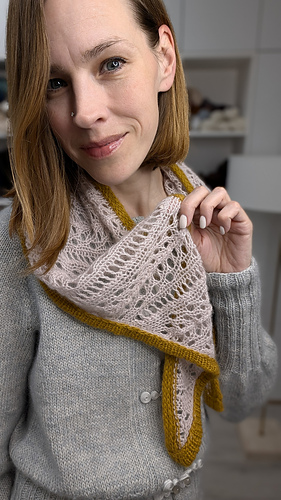
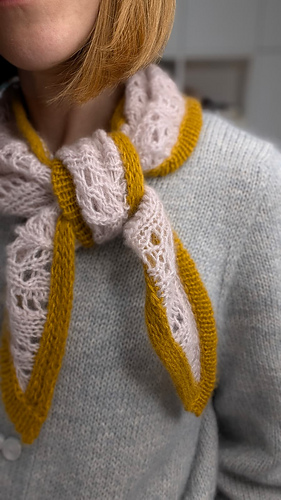
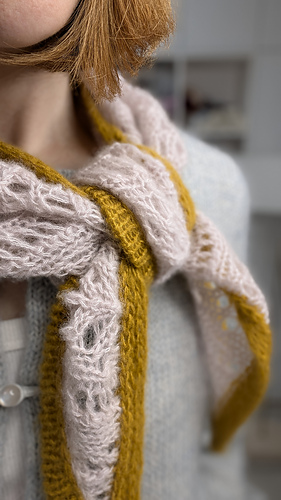
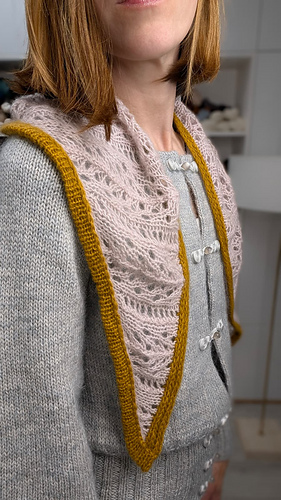
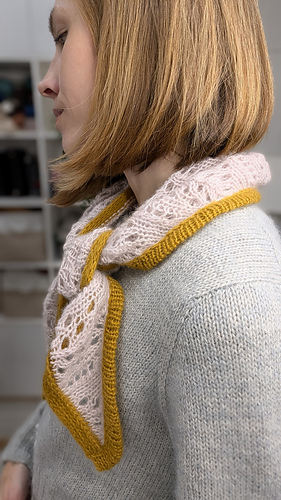
Shifa Shawl

Use code RAV_SORDINO to get a 15% discount. Code is valid until 21st June 23:59 BST.
A triangle lace shawl that grows as far as you want to take it.
The Shifa Shawl is a triangular lace design that starts from a single corner and grows for as long as you want it to. There is no set gauge and no yardage requirements. You decide how big it gets. A mini scarf from a single skein, a generous wrap from your favourite leftovers, or anything in between. Delicate lace in a fine gauge or bold and chunky. The pattern works with whatever you have and however far you want to take it.
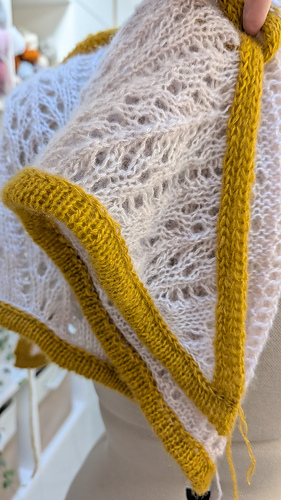
The contrast trim is added at the very end, so you can knit the body first and decide on the edging once you see how much yarn you have left.
This is an intermediate pattern that uses lace charts, lifted increases, double knitting, and picking up stitches along a vertical edge. You will also need to be comfortable holding a crochet hook. The techniques come together in a way that keeps things interesting without being overwhelming.
Shifa is the Arabic word for healing. This design came together during a week where I had to drop out of a marathon at the halfway point due to injury, and a few other things piled on that were hard to sit with. It became a soft place to land. Maybe it will be that for you too, or maybe it is just a fun, relaxing palette cleanser between bigger projects. Either way, it is yours to make what you need it to be.
Join our newsletter and be the first to know about new pattern releases, test calls exclusive discounts, events and other news.
Translations provided by knitlingo.com
Difficulty: Intermediate. Ability to read lace charts is required.
Finished size: Your choice.
Yarn: Any weight works. This shawl is designed to grow for as long as you want it to, so yardage is entirely up to you. Fingering weight knits up a lacy, airy shawl; sport or DK makes a classic lightweight wrap; worsted and up gives you a cosy, textured wrap.
A single 100 g skein is usually enough for a generous scarf. Whatever yarn you choose, plan for roughly a half as much yarn for the trim as was used for the body.
Yarn used in the sample is Cardiff Cashmere Prime (68% cashmere, 32% silk; 300 m / 330 yds per 25 g) held double: 1 ball in colourway Zen for the body and approximately half a ball of colourway Tadao for the contrast trim.
Gauge: Gauge is not critical for this shawl but it will affect the shawl’s final size and drape. Choose a needle 1–2 sizes larger than your yarn band suggests for the airy, drapey fabric that lace shawls want. Block your swatch the same way you plan to block the shawl and let it fully dry before evaluating.
Gauge of the sample is 15 sts & 24 rows = 10 cm / 4” in chart pattern.
Suggested needles: A needle 1–2 sizes larger than your yarn label suggests. Circulars with sharp tips, 60–100 cm / 24–40″ long, recommended.
The needle size used in the sample was 5.5 mm (US 9).
Notions: Stitch markers, locking markers, row counter, spare circular needle in the same size (for the tubular cast-on of the top trim), tape measure, tapestry needle, crochet hook of a similar size to your knitting needle.
Techniques used: Lace knitting, lifted increases, double knitting, picking up stitches along a vertical edge, tubular cast-on, crochet chain bind-off.
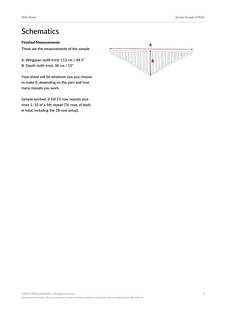
Construction notes: Shifa is worked flat from a central corner and grows outward, with lifted increases shaping the triangle. A setup chart (rows 1–18) establishes the edge and centre stitches; after that, a 12-row repeat is worked as many times as you like, with additional pattern repeats introduced as the shawl widens. Stop whenever you’ve reached your desired size.
The contrast trim is worked last in two stages. First, a double-knit top edge is worked along the long working edge, joining to the live body stitches one at a time. Then stitches are picked up along the two slanted sides and the top trim, and the edge trim is worked outward with centre increases, finishing with a stretchy crochet-chain bind-off.


 Ravelry download


 Cancel