

 Beagle Knits
 Pattern







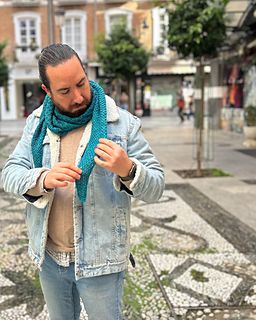

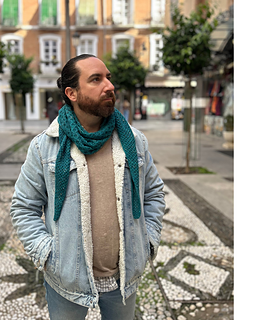
Solsticio Scarf

ENGLISH & ITALIAN BELOW
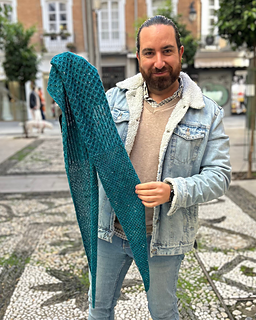
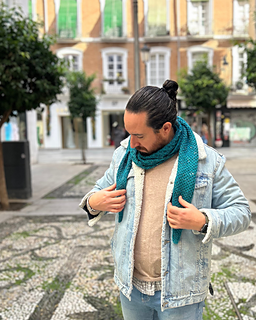
La bufanda Solsticio nace del deseo de celebrar el invierno con calma y textura. Crece vuelta a vuelta, con ritmo y propósito, hasta cerrarse en un borde limpio que simboliza el ciclo completo del año. Un recordatorio de que cada invierno trae consigo la promesa de una nueva luz.
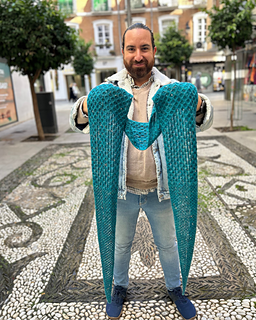
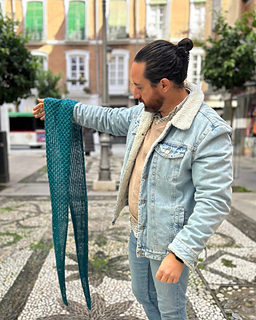
La bufanda comienza desde una punta con un montaje de lengüeta con I-Cord, que define el borde desde el inicio. Su construcción se divide en tres secciones: en la primera, el tejido se expande con aumentos en ambos bordes cada seis vueltas; la segunda forma la parte central, sin aumentos ni disminuciones; y en la tercera, el tejido se reduce siguiendo la misma frecuencia de disminuciones que en la primera. Para lograr un acabado limpio y continuo, los bordes de I-Cord se unen mediante un cierre Kitchener.
El cuerpo de la bufanda está tejido íntegramente con cruces de 2 y 4 puntos que hacen el efecto panal.
HILADO
2 madejas de Mohair Tweed de El Robledal de la Santa (52% seda, 24% mohair, 20% lana virgen, 4% Donegal Neps) (400 m/100 g) o cualquier otro hilado de grosor fingering de composición similar.
En la muestra se ha usado el color Northern Velvet.
MATERIALES
- Agujas circulares de 3,25 mm, o las necesarias para obtener la muestra de tensión, y cable de 40/60 cm.
- Aguja auxiliar de trenzas (opcional)
- Marcadores.
- Tijeras.
- Aguja lanera.
MEDIDAS FINALES
245 cm x 20 cm
NIVEL DE DIFICULTAD Y CONOCIMIENTOS NECESARIOS
Intermedio. Debes saber hacer (encontrarás vídeos en la sección VÍDEOS DE TÉCNICAS):
- Montaje de lengüeta con I-Cord.
- Aumentos inclinados del derecho.
- Disminuciones simples.
- Cruces de puntos con o sin aguja auxiliar.
- Punto Kitchener.
The Solsticio scarf is born from the desire to celebrate winter with calm and texture. It grows row by row, with rhythm and purpose, until it is finished with a clean edge to symbolise the complete cycle of the year. A reminder that every winter brings with it the promise of a new light.
The scarf starts at the tip with an I-cord tab cast-on, which defines the edge from the start. The construction is divided into three sections: In the first, the fabric expands with increases at both edges every six rows; the second forms the central part, without increases or decreases; and in the third, the fabric is reduced following the same frequency of decreases as in the first. For a clean and continuous finish, I-cord edges are joined together with the Kitchener stitch.
The body of the scarf is worked entirely with cables of 2 and 4 stitches to create the honeycomb effect.
YARN
2 skeins of Mohair Tweed from El Robledal de la Santa (52% silk, 24% mohair, 20% virgin wool, 4% Donegal Neps) (400 m/100 g) or any other fingering weight yarn of similar composition.
The sample shown used the colour Northern Velvet.
MATERIALS
- Circular needles of 3.25 mm, or size needed to get gauge, and a cable 40/60cm.
- Cable needle (optional)
- Stitch markers.
- Scissors.
- Tapestry needle.
FINAL MEASUREMENTS
245 cm x 20 cm.
DIFFICULTY LEVEL AND NECESSARY KNOWLEDGE
Intermediate. You should know how to do (you will find videos in the TECHNIQUE VIDEOS section):
- I-cord tab cast-on.
- Leaning knit increases.
- Single decreases.
- Cables with or without a cable needle.
- Kitchener stitch.
La sciarpa Solsticio nasce dal desiderio di celebrare l’inverno con calma e texture. Cresce ferro dopo ferro, con ritmo e intenzione, fino a quando non è terminata con un orlo pulito a simboleggiare il ciclo completo dell’anno, per ricordarci che ogni inverno porta con sé la promessa di una nuova luce.
La sciarpa inizia dalla punta con un I-cord tab cast-on, che definisce il bordo fin dall’inizio. La costruzione è divisa in tre sezioni: nella prima, il lavoro si espande con aumenti su entrambi i lati ogni 6 ferri; la seconda forma la parte centrale, senza aumenti né diminuzioni; nella terza, il lavoro decresce seguendo la stessa frequenza di diminuzioni come nella prima parte. Per una finitura continua e pulita, i bordi a I-cord sono uniti insieme con una cucitura a punto maglia (Kitchener stitch).
Il corpo della sciarpa è lavorato interamente a trecce di 2 e 4 maglie per creare l’effetto a nido d’ape.
FILATO
2 matasse di Mohair Tweed di El Robledal de la Santa (52% silk, 24% mohair, 20% lana vergine, 4% Donegal Neps) (400 m/100 g) o qualunque altro filato di spessore fingering con una composizione simile.
Per l’esempio mostrato è stato usato il colore Northern Velvet.
MATERIALI
- Ferri circolari da 3.25 mm, (o nella misura necessaria per ottenere la tensione desiderata) e un cavo da 40/60cm.
- Ferretto da treccia (opzionale)
- Marcapunti.
- Forbici.
- Ago da lana.
MISURE FINALI
245 cm x 20 cm.
LIVELLO DI DIFFICOLTÀ E COMPETENZE RICHIESTE
Intermedio. Dovresti sapere come fare (nella sezione VIDEO DELLE TECNICHE troverai dei link a dei video):
- I-cord tab cast-on.
- Aumenti intercalati a diritto.
- Diminuzioni singole.
- Trecce con o senza ferretto.
- Cucitura a punto maglia (Kitchener stitch).


 Ravelry download


 Cancel