

 Zabelle Zakarian's Ravelry Store
 Pattern

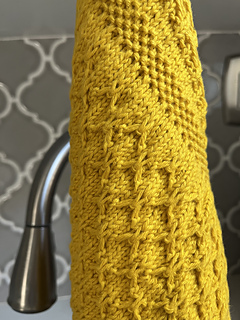
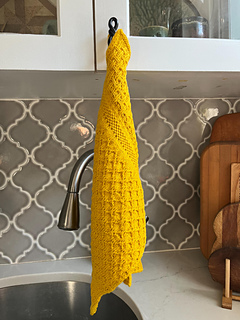
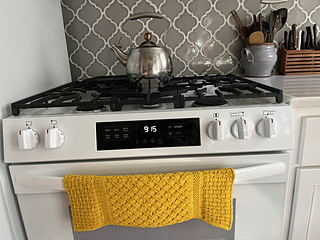
The Pollinator Towel

Knitters are inundated with patterns for dish cloths and towels! Some are cute graphic designs hoping to find a practical application; many are oversized swatches; others take time away from expanding your repertoire of stitches in a more mindful and satisfying way. So why would you choose to knit one?
The Pollinator Towel turns basic knit, purl, and slip stitches into a honeycomb relief called The Pollinator Stitch; or a textured Burlap Weave stitch; and more. It’s an example of how we can combine stitches in playful and unexpected ways to create visual interest and texture just as a composer of music might vary a musical theme.
By knitting slip stitches in conjunction with one another, you may discover how versatile slip stitches can be and why Barbara G. Walker’s wisdom about lace knitting—and experimenting with different yarns and needle sizes to achieve a “personal gauge”—also applies to deceptively ordinary slip stitches and a working gauge!
“Practically any lace pattern or slip stitch pattern can be subjected to little variations that change its appearance, sometimes very markedly. Once you have thoroughly learned any lace pattern or slip stitch pattern, possible variations continue to pop into your head as you work. A little playing around with these ideas will often produce the most satisfying event in all knitting experience: a brand-new, original pattern, all your own!” (See the Knitting References.)
Practical and economical, The Pollinator Towel also makes a cheerful heartfelt gift. This towel can be completed with 2 skeins of cotton and linen yarn (or 100% cotton yarn) with minimal waste. Solid color yarns highlight the stitch definition, and slip stitches add loft and elasticity in different dimensions: horizontally and diagonally.
But there is more to its name than meets the eye: The Pollinator Towel demonstrates how slip stitch variations affect the elasticity of a fabric made with an inelastic yarn. This surprising result explains why materials scientists, designers, and engineers are currently studying the physical properties of knitting stitches to learn how to design new materials. Inspired by hand-knit fabrics, their interest in knitted textiles is based on “the need for cross-disciplinary pollination.” (See the Cross-Disciplinary References.)


 Ravelry download


 Cancel