

 Beagle Knits
 Pattern



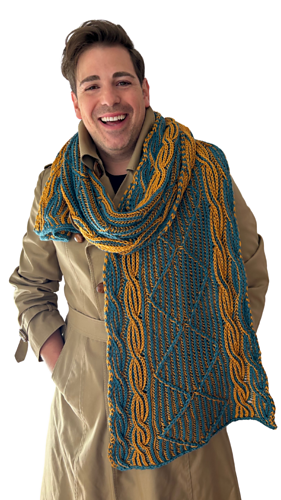
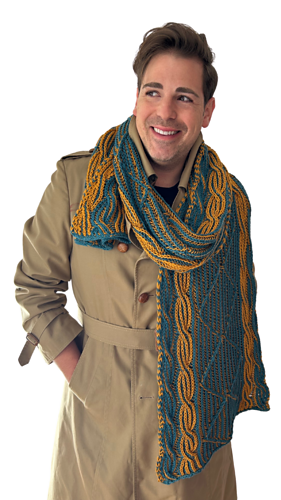
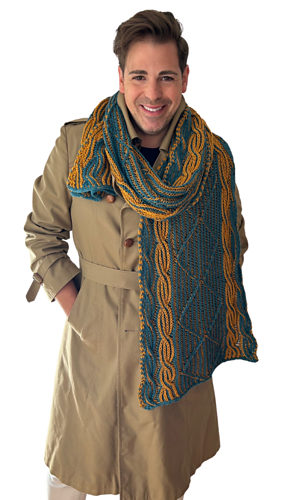
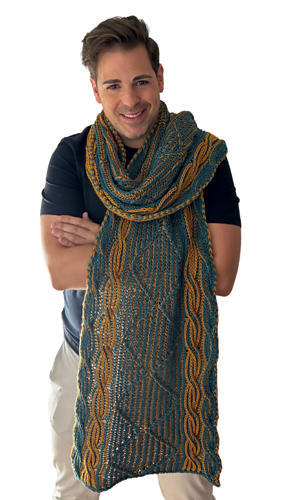
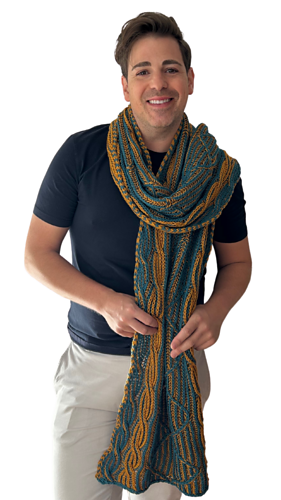
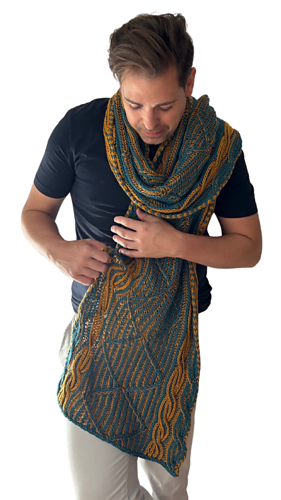
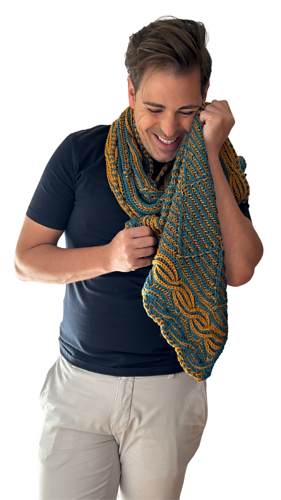
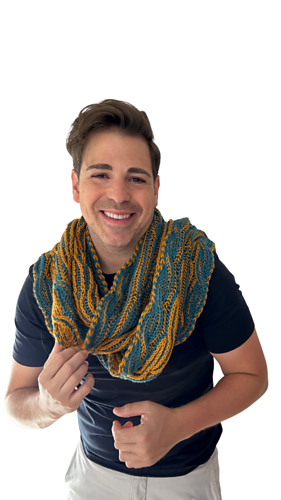
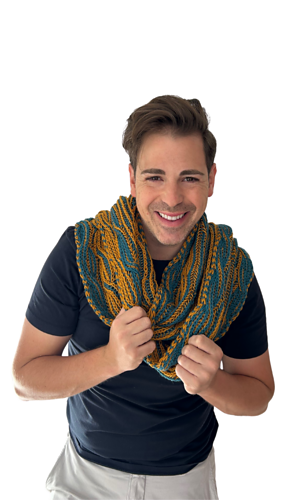
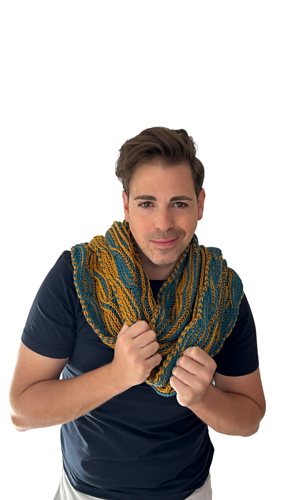
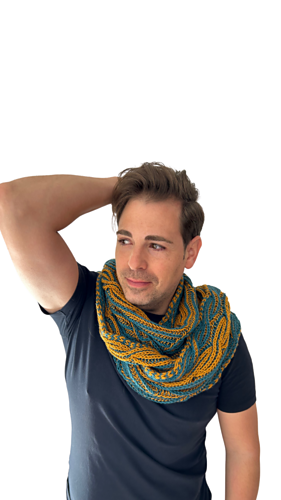
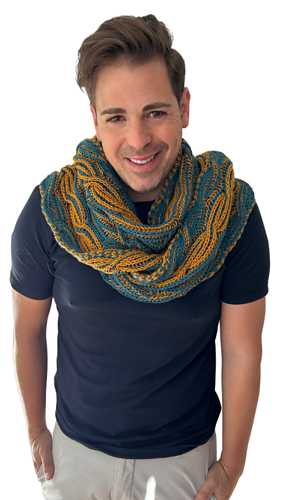
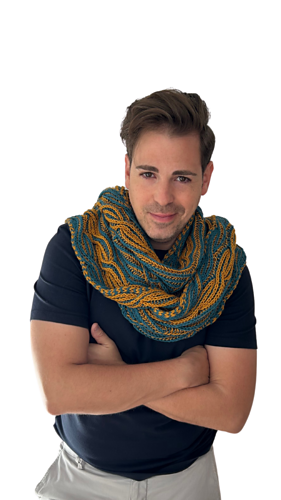
Trenzada

ENGLISH & ITALIAN BELOW
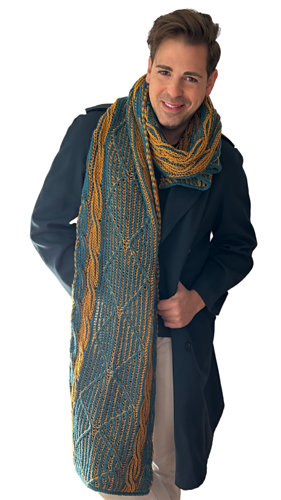
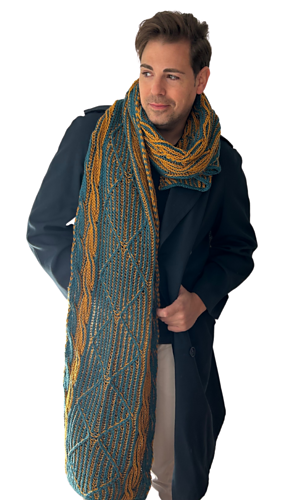
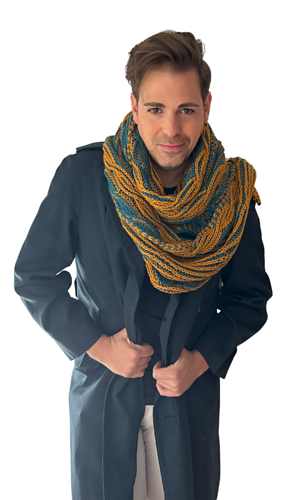
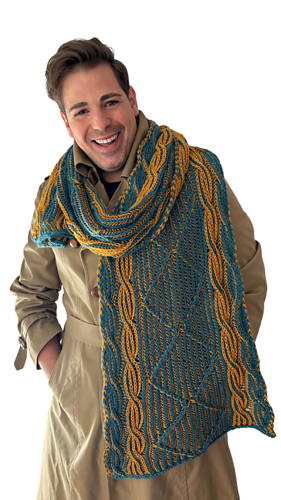
La Estola trenzada es el resultado del curso/taller de trenzas en punto brioche. Comienza con un montaje de I-Cord hasta obtener el ancho de la estola. A continuación, se comienza a trabajar un motivo de trenzas en punto brioche que también combina el brioche sincopado, de forma que, en unas trenzas el color principal es el color A y en otras el color principal es el color B. Este motivo se repite tantas veces como larga se quiera la estola. Para terminar, se cierra también con un cierre con I-Cord.
HILADO
Merino Super Wash DK de Casasol (100% merino super wash de 19 micras) (200 m/100 g) o cualquier hilado de grosor y composición similares.
- Color A: 600 m (en la muestra se ha usado Verde azulado).
- Color B: 600 m (en la muestra se ha usado Mostaza).
MATERIALES
- Agujas circulares de 4 mm (o las necesarias para obtener la muestra de tensión) y cable de 80 cm.
- Agujas circulares de 5 mm.
- Marcadores.
- Aguja auxiliar de trenzas.
- Tijeras.
- Aguja lanera.
MEDIDAS FINALES
200 cm x 50 cm.
NIVEL DE DIFICULTAD Y CONOCIMIENTOS NECESARIOS
Avanzado. Debes saber hacer (encontrarás vídeos en las abreviaturas y a lo largo del patrón):
- I-Cord.
- Punto brioche.
- Trenzas en punto brioche.
- Cierre con I-Cord.
- Remallado invisible o punto Kitchener.
The Trenzada Wrap is the result of the brioche cable course/workshop. It begins with an I-cord cast-on worked until you reach the width of the stole. You then begin working a brioche cable motif that also combines syncopated brioche, so that Colour A is the main colour in some cables and Colour B is the main colour in others. Repeat this motif as many times as needed to reach your desired stole length. To finish, work an I-cord bind-off.
YARN
Merino Super Wash DK by Casasol (100% 19-micron superwash merino wool) (200 m/100 g), or any yarn of a similar weight and fibre composition.
- Colour A: 600 m (the sample shown used Verde azulado).
- Colour B: 600 m (the sample shown used Mostaza).
MATERIALS
- 4 mm circular needles (or size needed to get gauge) and an 80 cm cable.
- 5 mm circular needles.
- Stitch markers.
- Cable needle.
- Scissors.
- Tapestry needle.
FINAL MEASUREMENTS
200 cm x 50 cm.
DIFFICULTY LEVEL AND NECESSARY KNOWLEDGE
Advanced. You should know how to do the following (you will find videos in the abbreviations section and throughout the pattern):
- I-cord.
- Brioche stitch.
- Brioche cables.
- I-cord bind-off.
- Invisible seam or Kitchener stitch.
La stola Trenzada nasce dal corso/laboratorio sulle trecce a punto brioche. Si inizia con un avvio a I-Cord fino a ottenere la larghezza della stola. Si prosegue lavorando un motivo di trecce a punto brioche che combina anche il brioche sincopato: in alcune trecce il colore principale è il colore A, mentre in altre è il colore B. Il motivo viene ripetuto fino a raggiungere la lunghezza desiderata. Per terminare, si esegue una chiusura a I-Cord.
FILATO
Merino Super Wash DK di Casasol (100% merino superwash da 19 micron) (200 m/100 g) o qualsiasi filato di spessore e composizione simili.
- Colore A: 600 m (nell’esempio mostrato è stato usato Verde petrolio).
- Colore B: 600 m (nell’esempio mostrato è stato usato Senape).
MATERIALI
- Ferri circolari da 4 mm (o della misura necessaria per ottenere la tensione indicata) e cavo da 80 cm.
- Ferri circolari da 5 mm.
- Marcapunti.
- Ferretto ausiliario per trecce.
- Forbici.
- Ago da lana.
MISURE FINALI
200 cm x 50 cm.
LIVELLO DI DIFFICOLTÀ E COMPETENZE RICHIESTE
Avanzato. Dovresti sapere come eseguire le seguenti tecniche (troverai i video nelle abbreviazioni e nel corso del modello):
- I-Cord.
- Punto brioche.
- Trecce a punto brioche.
- Chiusura con I-Cord.
- Cucitura invisibile o punto Kitchener.


 Ravelry download


 Cancel

154 projects
stashed 197 times
 stashed


