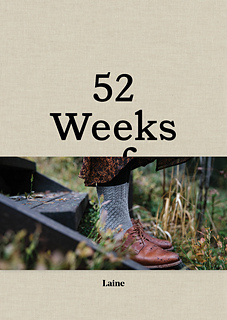
Made three pairs of these slippers and used the same technique for five other slippers. Here are the videos I found most helpful and I took photos at the side margin to help visualize how to work the techniques.
Two-Colour Judy’s Magic CO
https://youtu.be/lBBRghe1f6g
When making increases lift the same color you’re making the stitch from the two strands.
Knitted the opening for foot on waste yarn: knit first stitch from chart B, then knit the following 29 sts on waste yarn. https://youtu.be/aOX9h5Dyzp4
Heel: One pattern repeat more (25 rows instead of 19)
6 pattern repetitions before toe decreases
1 additional toe decrease (row 13) so that 18 sts remain on each needle before grafting
The two-colour grafting following this video (the video is a little bit blurry) https://www.youtube.com/watch?
https://youtu.be/qhipqdexZxU?si=Hajw5G5su11aiHyZ
The 2 videos for i-cord bind off in the round: https://youtu.be/OeHqyElAlYw
https://youtu.be/Qo2hLugfXvg
Written instructions and chart for I-cord BindOff
http://www.lamaisonrililie.com/uploads/2/4/3/4/24344284/i...
https://kddandco.com/tutorials/two-colour-grafting/
§§§§§§§§§§§§§§§§§§§§§§§§§§§§§§§§§§§§
US 4 to cast-on and work slipper
US5 for I-cord cuff
Heel wedge (19 rounds)
Actual sock heel wedge is 2.5” in length.
CastOn 34 sts w JBMC.
The CO row counts as Row 1 in Chart A.
Follow Chart A for 19 rows increasing to 60 sts.
With US4 needles, CO 34 sts using JBMCO w 2 colors:
Using MC, CastOn normally w no slip-knot and Tail yarn over index finger and form two pairs of sts in MC.
Add CC yarn over upper needle and CastOn 2 sts.
(See bottom photos at left)
Continue drawing the new color through the legs
of the previous color.
In photo, I’m reaching through the center
of the grey legs to bring the yellow
into position to cast-on.
https://youtu.be/lBBRghe1f6g
CastOn 34 sts w JBMC
Yarn tail over index. New color brought through legs of previous color.
The CO row counts as Row 1 in Chart A.
Follow Chart A for 19 rows increasing to 60 sts.
Work Chart A to form Heel (2.5” in length and height)
Increases are made 2 sts in on right side
and 1 st in on left side
There will be a continuous edge column of MC, CC, MC.
Gauge Testing:
US 2: 8spi, 9.5 rows per in.
US 3: 7.5 spi
US 4: 7 spi, 6.5 rows per in.
Therefore, chose to use US 4.
Size Chart showing length for Shoe Size:
https://kateatherley.com/2017/08/10/foot-size-tables/
Holding Sts for Foot Opening
Chart B: K1, I then knit 29 sts with orange scrap yarn, slipped those orange sts back to left needle and resumed with working yarn (instead of placing the next 29 sts on holder and casting on 29 sts.) 60 sts.
Cont rep of Chart B until 1.75” shorter than foot length
(Completion of 6th checkered “X” of motif)
Foot (36 rounds)
Work foot until it is 7 7/8” from cast-on edge which is 6 repeats of Chart B
Toe Wedge (12rounds + grafting)
Actual sock toe wedge is 2” in length.
Dec alt rounds 4 times; then dec every round for 4 times. (28 sts)
Decreases are 1 stitch end on right side and very end on left side to maintain an edge band of CC sandwich in between MC start on row 1 of Chart and work through two repeats of Chart: K1, SSK, work across to last 2 sts, K2tog.
Set up for final toe decrease:
Rotate work perpendicular as in photo so you are working from right to left edge across toe.
On extra DPN or straight cable needle (same size DPN US4) slip 2 sts before BOR marker (bottom of slipper) and 3 sts after BOR (top of slipper) so the CC column stitch is in middle w a pair of sts on either side that will be decreased.
Holding the extra DPN perpendicular to parallel toe needles, work across the 5 sts: K2tog in MC, k1 in CC, SSK in MC.
Then slip another stitch on each end of the extra DPN so you have a pair of sts on either side of the center CC again.
Grafting in 2 Colors
Last 6 sts, Kitchener Graft is in two colors so thread each color on its own tapestry needle,
the stitches are arranged so that the top single st and bottom 2 stitches are in matching colors in rep sets of MC, CC, MC. Work the MC stitches with the MC yarn, then the CC stitches with the CC yarn and finally bring your MC yarn behind the CC stitch to work the third set of MC stitches. Rep from to work the other sets of sts.
https://kddandco.com/tutorials/two-colour-grafting/
id=9jHdRpOb0P-qIfp7dB4yXJPw4Okw_xmyjb2SYo8TSNIPTe3VDDQcFhadXo-znpKQixNt9xFVDRFTWKg_QWEmWMyH1hT6WTvpEA6ktoCYg6Vldti0wWpXl94SBbZRiTuk-R33XxteGotPJ03i1k8R-Powe6InIxwJPEtnQEuD4EUiOK0bRb853WL6F4r7fl-M&id2=
https://youtu.be/hff-YwcfyPo
https://youtu.be/qhipqdexZxU
I-Cord Cuff Use a larger size needle as Icord can be a little tight.
Pick up sts at foot opening before removing the scrap yarn and knit one round adding extra sts in gap at each side. I knit these sts so they twist at the base.
Icord sts are perpendicular to colorwork stockinette sts so go up one size needle for I-cord, using US 5 DPNs or don’t tighten sts like when normally working an I-cord because you want it to stretch over your heel.
I used a Knitting-On to CastOn 4 sts to begin the I-Cord and transfer the drawn loop from underneath (tips point same direction).
Holding a US5 DPN in R hand, work sequence of I-Cord: K3, K2tog TBL.
Transfer the three sts from RN to LN and rep.
At end, graft last 4 sts to the first 4 sts:
Thread tapestry needed and insert purlwise through first stitch on needle, pass through behind both legs at the base of first V of I-cord CastOn, then return to first stitch on needle knitwise then repeat by entering purlwise on next sts
https://youtu.be/xZvfXSQaF-8
I-cord graft chart:
http://www.lamaisonrililie.com/uploads/2/4/3/4/24344284/i...
I picked up the stitches before I removed the waste yarn and it helped tame the floats. Other way around the issue is the knit a row in one color after the waste yarn before resuming stranded work.
I also like to pick up stitches for a button band before cutting the steek—seems to lessen the stress on the stitches adjacent to the steek section.
Learned techniques on this project:
Magic CastOn in 2 Colors
A More Rounded sock toe (or mitten tip) Method of continuing the decorative 3-stitch edge band
Kate Davis on Grafting w 2 Colors
I-Cord w Grafting in the Round
Adding I-cord to live stitches
JMCO
I’ve linked several videos.
StaciPerry of Very Pink shows how the JMCO looks in a finished toe wedge and her Method is similar to JudyBecker’s when she first published this cast-on in 2006 w half the stitches in reverse mount that you later correct by knitting the first row through the back loop.
Cat Bordhi shows the cast-on’s smooth knit side and the bumpy purl side. She also winds the yarn counterclockwise so the cast-on stitches sit on the needle in the correct orientation.
Sock Mathematician shows how I like to start all LongTail CastOns w positioning yarn in the “sling shot” in left hand w tail yarn over index finger and bring the needle tip down and twist to mount the first stitch without slip knot and so the tail goes around to the outside and over to index finger.
Suzanne shows how to cleanly twist the yarns after the cast-on so the tail is caught as you begin to knit the first row.
KnitPurl Hunter short video shows another way to start the cast-on without a slip knot and then position yarn in left hand.
Roxanne gives history, clear demonstration, and assures you that it won’t matter if you follow other versions that vary in whether the first stitch is on the top or bottom needle and if the yarn is wrapped so stitches are reverse mount or not.
VeryPink: https://youtu.be/GV9UaFgZ6Q0
CatBordhi: https://youtu.be/3ItemF86f90
Sock Mathematician: https://youtu.be/w1WweVpf9k8
Suzanne Bryan: https://youtu.be/j5MaMEfAlew
KnitPurlHunter: https://youtu.be/gkyd3nq3Yn8
Roxanne Richards: https://youtu.be/KEnk-Kl513A
JMCO as a Provisional CastOn
Roxanne Richards: https://youtu.be/ROx-9OY_xGg
Suzanne’s Provisional Caston with scrap strand yarn
https://youtu.be/-CfZ8b_YNuQ
CastOns for top down socks
Suzanne’s Tubular CastOn in the Round starting w crochet chain
https://youtu.be/daebO9c5qDo
Suzanne’s German Twisted aka Old Norwegian
She shows and compares the German Twisted CastOn to the Traditional LongTail CastOn
https://youtu.be/RlE_diUDPkE
Rox’s Alternating LongTail CastOn for 2x2 Rib
https://youtu.be/QT_Z6u7nyAs
Foot circumference: 9”
Foot length: 10.375”
Toe length: 2”
Ankle height: 2.675”
Heel diagonal: 13”
Ankle circumference: 9.5”
Leg circumference at 10” from floor: 11.5”
Kerrie Brown is a TKGA-certified Master Hand Knitter, knitwear designer, and retired Doctor of Optometry who leads local community fiber arts initiatives in Duck, North Carolina.Background & Professional WorkMaster Hand Knitter: She completed her certification through The Knitting Guild Association (TKGA) Master Hand Knitting program. This program requires an intensive multi-level assessment of advanced technical execution, stitch precision, and history.Design Specialization: Her textile work focuses on traditional regional techniques, including structural cables for Irish Aran and British Guernsey sweaters, alongside intricate colorwork for Icelandic, Norwegian, and Fair Isle styles. She has published designs such as the Ramberg Kep through The Knitting Guild Association.Consulting & Charity: She actively works as an instructor and consultant for the Knitwell Program (which brings the therapeutic benefits of knitting to pediatric hospitals and cancer centers) and serves as a consultant for the Christmas at Sea Program in New York City.Community Engagement in Duck, NCKerrie hosts a community knitting group based out of the Outer Banks (OBX) area in Duck. The group brings together adults and teenagers to master basic knitting mechanics, collaborate on communal charity projects, or receive one-on-one technical troubleshooting.
Learn advanced technical execution and historical construction, and community As a TKGA-certified Master Hand Knitter and designer, she has technical expertise across multiple traditional genres.Advanced Technical & Fitting SkillsSweater Fitting and Sizing: Adjusting pattern shapes for precise custom sizing, crucial for tailored sweaters like her Ramberg Kep.Correcting Pattern Mistakes: Systematically identifying, dropping down, and correcting tension or stitch errors without ripping out full rows.Ergonomics & Mechanics: Refining your physical knitting posture and hand positioning to maintain consistent stitch tension, protect your joints, and avoid muscle fatigue.Traditional Regional ConstructionStructural Cables: Navigating the intense charting and geometric execution required for British Guernsey and Irish Aran sweaters.Complex Multi-Colorwork: Mastering tension control and yarn dominance for Fair Isle, Norwegian, and Icelandic stranded colorwork.Non-Profit & Therapeutic KnittingHospital Knitting Comforts: Sourcing and working with skin-safe, highly washable fibers tailored for pediatric and oncology patients through the Knitwell Program.Cold-Weather Durability: Crafting highly weather-resistant garments following strict, traditional guidelines for mariners through the Christmas at Sea Program.


 HeyKerrieAnn notebook


 projects
 handspun
 stash
stash queue
queue favorites
 friends
 groups & events
 needles & hooks
 library
 blog posts
 Project