

 Mycah Miller Art
 Pattern

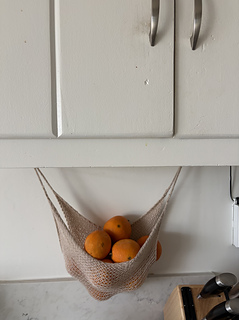
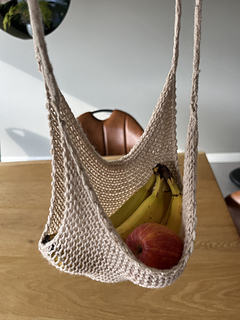
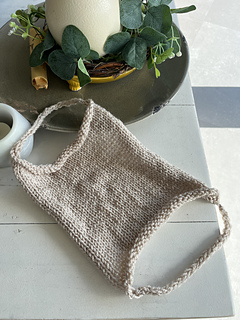
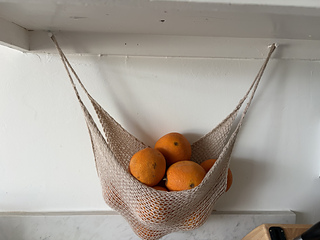
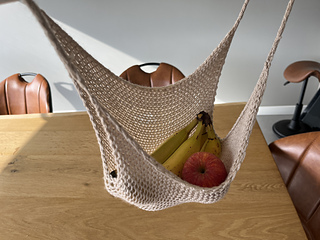
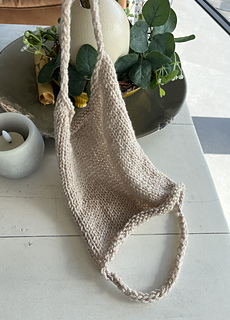
Briggs St Fruit Hammock

This project is very beginner-friendly. Techniques necessary include knit stitch, purl stitch, slipping a stitch, I-cord (no previous experience with I-cord necessary), and picking up stitches (only 3, twice).
My sister often sends me videos or photos of items she’d like me to knit via Instagram, and, as is the plague of many knitters, often sends me crochet items she’d like replicated. I couldn’t find a knitted fruit hammock I particularly liked the pattern for, so I decided to make up my own. The Briggs St Fruit Hammock (named for my sister’s first apartment) is a very beginner-friendly and quick knitted project to add a touch of knit to your kitchen.
This pattern uses a simple stockinette knit for the body with a large needle (in comparison to yarn size) to make a breezy and stretchy fabric to allow airflow and hold your fruit away from the counter space. Both of function and of form, a fruit hammock gives the benefit of using otherwise empty airspace to hold your produce under a cabinet or hung in an easy-to-reach space. A slipped stitch edge is used to create a clean look with a slightly rolled edge. This project is very yarn economical, using 25g (75m) of DK weight yarn, and is perfect to use up those beautiful scraps you have, or to try out a new yarn without committing to a large project.
The pattern is written for a final project size of 10in wide (unstretched) by 11in unstretched or 27in stretched long, but adjustments are listed to change width and length. The pattern gauge is approximately 15.5 stitches and 20 rows per 4x4 inches with 8mm needles in stockinette.
Note that acrylic is recommended, though other yarns can be used. Acrylic holds its shape without stretching much over time and is very easily washable in case you don’t get to that last piece of fruit before it goes. While cotton is easily washed, cotton stretches over time. Animal fibers like wool have the benefit of being widely considered antibacterial, but may also stretch and may be more difficult to wash. If you’d like to use a non-synthetic material, I recommend making a gauge swatch with straps as directed in the pattern. Measure both swatch and straps before and after blocking. Then, hang something within the swatch (like an apple!) and leave it for a week or two before remeasuring to see the amount of stretch.
This pattern is completely free! If you have any thoughts, questions, or comments about the pattern, please message me on Ravelry @Mysho22, on Instagram @MycahKnits, or email me at MycahMillerArt@Gmail.com!


 Ravelry download

 Buy it now
 Add to cart
 Cancel
7463 projects
stashed 8738 times
 stashed