

 Rountree Stitchery Patterns
 Pattern

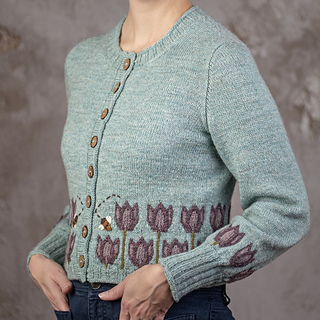
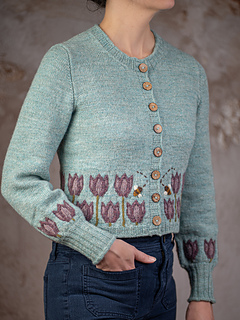
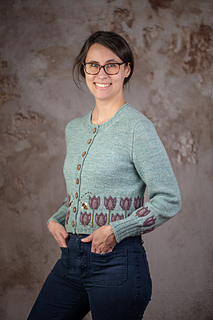
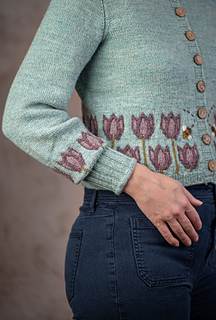
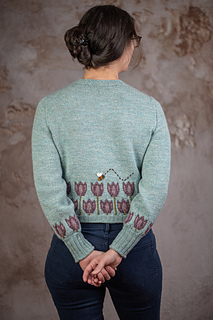
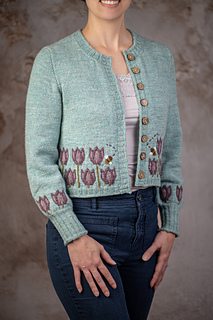
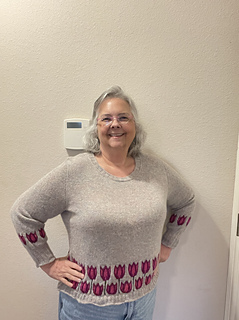
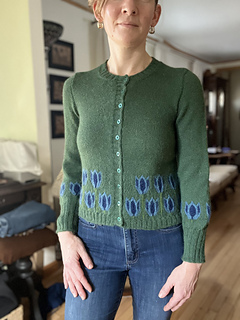
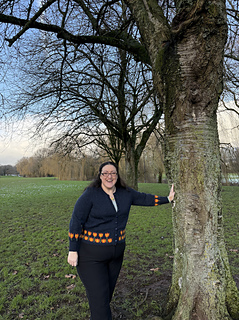
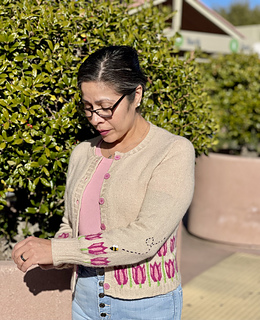
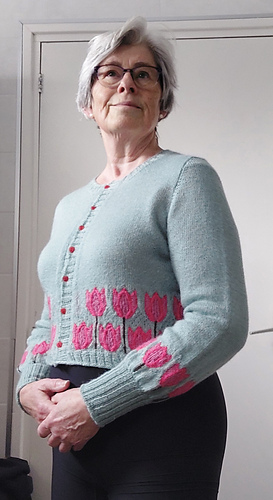
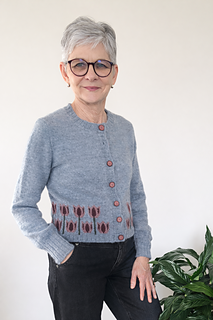
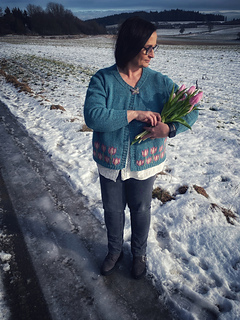
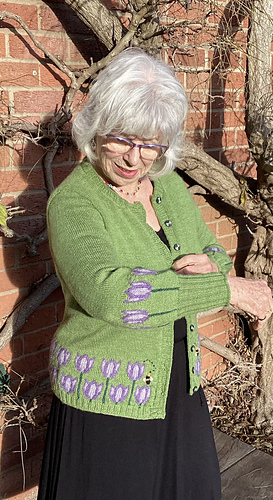
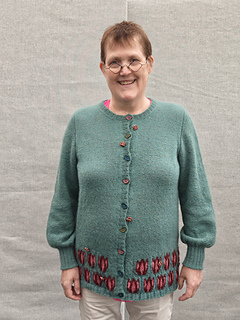
Fosteriana

Add the Fosteriana Cowl to your cart to receive it free with the purchase of the sweater!
This pattern purchase includes the following files:
Fosteriana Cardigan
Fosteriana Cardigan Low Vision
Fosteriana Pullover
Fosteriana Pullover Low Vision
Kits from John Arbon are available HERE.
About the Low Vision Files: 22pt san serif font. No columns or italics. The chart on the low vision file has been enlarged for better visibility, which is also helpful for viewing the pattern via your phone.
About Fosteriana:
Instructions are written and charted, and include many video tutorials. An Alteration Guide is included so you can achieve the best fit for your body.
Level: Advanced. This pattern calls for working stranded colorwork and cables simultaneously. At times, three colors of yarn are held. As always, fully written instructions are included, along with a chart. In an effort to make the pattern accessible to ambitious intermediate knitters, there are videos of the more complicated techniques. In the way of minimum skills needed, I recommend knowing how to knit stranded colorwork OR how to cable before attempting this project.
This sweater is worked by casting on and knitting the back panel, which includes short row shaping around the back neck. The shoulders are picked up and shaped from the cast on edge of the back panel, first left, then right. The right shoulder is then knit across, the neck front is cast on, and the left shoulder is knit across. Knitting continues back and forth for the remainder of the front panel. At the underarm, the remainder of the body is worked in the round.
Sizes 6-17 join in the round at the finished upper bust circumference, and have bust increases after joining in the round that are worked until the finished full bust circumference is reached.
All sizes can customize these using the Alteration Guide.
The body is knit straight until cable colorwork is worked to create the tulip motif, which ends around the high hip. Sleeves are worked from the top down using German Short Rows. Around the mid forearm, the tulip motif is worked again, followed by sharp decreases to a fitted 4” (10.2cm) cuff.
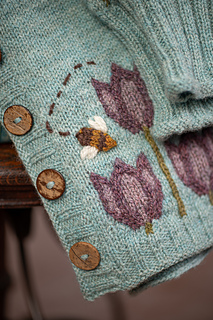
At this point, the cardigan is blocked and steeked. The collar may be picked up and worked anytime after the completion of the upper body, but should be completed before button bands are added. If tulip stems were not knit in pattern, they are duplicate stitched onto the sweater. One or more applique bees may be created and sewn to the cardigan for embellishment.
Sizing:
Sizes: 1 (2, 3, 4) {5, 6, 7} [8, 9, 10] (11, 12, 13) {14, 15, 16, 17}
Model is wearing Size 3 with 1.5” (3.8cm) of positive ease in the upper bust, full bust, and bicep.
Upper Bust Circumference (A): 31 (33.25, 35.5, 37.75) {40.25, 41.25, 43.5} [45.25, 45.75, 47.5] (49.25, 51, 52.75) {54.5, 56.25, 57.75, 59.5} inches or 78.5 (84.5, 90.5, 96) {102, 105, 110.5} [115, 116.5, 121] (125, 129.5, 134) {138, 142.5, 147, 151.5} centimeters.
Full Bust Circumference (B): 31 (33.25, 35.5, 37.75) {40.25, 42.5, 44.75} [47, 49.25, 51.5] (53.75, 56.25, 58.5) {60.75, 63, 65.25, 67.5} inches, or 78.5 (84.5, 90.5, 96) {102, 108, 113.5} \119.5, 125, 131] (137, 142.5, 148.5) {154, 160, 166, 171.5} centimeters.
Bicep (C): 11.5 (12, 12.25, 13.25) {14, 15.25, 15.75} [16, 16.75, 17.75] (18.25, 19.25, 20.25) {21.25, 22, 22.5, 23.25} inches, or 29 (30.5, 31, 33.5) {35.5, 38.5, 40} [40.5, 43, 45] (46.5, 48.5, 51.5) {53.5, 56, 57.5, 59} centimeters.
Armhole Depth (D): 7 (7.25, 7.5, 7.5) {7.75, 8, 8.25} [8.5, 8.5, 8.75] (9, 9.25, 9.25) {9.5, 9.75, 10, 10.5} inches, or 17.5 (18, 19, 19.5) {20, 20.5, 21} [21.5, 22, 22.5] (23, 23.5, 23.5) {24, 25, 25.5, 26.5} centimeters.
Body Length (E): 11.5 (11.25, 11, 11) {10.75, 10.75, 10.5} [10.5, 10.75, 10.75] (10.5, 10.5, 10.75) {11.25, 11.75, 12.25, 12.5} inches, or 29.5 (29, 28, 27.5) {27, 27.5, 27} [27, 27, 27] (26.5, 26.5, 27.5) {28.5, 29.5, 31, 32} centimeters.
Sleeve Length (F): 17.5 inches (44.5cm) across all sizes.
Gauge:
Stockinette: 28 sts and 39 rows in 4” (10.2cm)
Motif: One motif repeat is 2.25” (5.8cm) wide and approximately 2” (5cm) tall.
Materials:
Yarn:
Main Color: 1070 (1145, 1220, 1295) {1370, 1445, 1520} [1595, 1670, 1745] (1820, 1895, 1970) {2045, 2125, 2200, 2275} yards or 980 (1050, 1120, 1190) {1255, 1325, 1395} [1460, 1530, 1600] (1670, 1735, 1805) {1875, 1945, 2010, 2080} meters.
Contrast Color A (Tulip Outline): 115 (125, 130, 140) {145, 160, 165} [170, 175, 185] (195, 200, 215) {220, 230, 240, 245} yards, or 105 (115, 120, 130) {135, 145, 150} [155, 165, 170] (180, 185, 195) {200, 210, 220, 225}meters.
Contrast Color B (Tulip Shading): 100 (105, 110, 120) {125, 135, 140} [145, 150, 155] (165, 170, 180) {185, 195, 200, 205} yards, or 90 (95, 100, 110) {115, 125, 130} [135, 140, 145] (150, 155, 165) {170, 180, 185, 190} meters.
Contrast Color C (Stems): 15 (15, 15, 15) {20, 20, 20} [20, 20, 20] (25, 25, 25) {25, 25, 30, 30} yards, or 15 (15, 15, 15) {15, 20, 20} [20, 20, 20] (20, 20, 25) {25, 25, 25, 25} meters.
To knit the bee: Approximately 25 yards/20 meters each of a bee body, stripe, and wing color in a 4-ply yarn. This will make up to 5 bees.
Yarn totals include amounts for swatching. More or less yarn may be needed if alterations are made.
Recommended Yarn: John Arbon Textiles Knit by Numbers 4 ply, a 50/50 blend of Bluefaced Leicester and Falklands Merino with 400 meters in 100g. (Also sold in 25g Mini Skeins.) Note: If you are substituting yarn, choose a wool yarn that blocks well.
Sample utilizes KBN97 (MC), KBN88 (CCA), KBN90 (CCB), KBN56 (CCC), KBN 110 (bee body), KBN07 (stripes) and KBN55 (wings).
Suggested Needles:
Flat Stockinette and Cable Colorwork Rounds 5-15: US 2 (2.75mm) circular knitting needles, or size needed for correct gauge.
Note: I sized up to US 3 (3.25mm) to maintain gauge in the round. Work Cable Colorwork Rounds 1-4 and 16 using the needle size you used for your stockinette in the round.
Ribbing: US 1 (2.25mm), or two sizes smaller than size used for stockinette in the round.
Circular needle lengths should correspond to the chest, hip, and sleeve measurements of your garment. If there is a great difference between your upper bust, full bust, waist, or hips, plan to have lengths corresponding to each of these.
Notions:
¨ Cable needle
¨ Tapestry needle
¨ 8 (8, 8, 8) {8, 8, 8} [8, 8, 8] (8, 10, 10) {9, 9, 10, 10} Buttons, 0.75” (1.9cm) max. diameter
¨ Crochet Hook, Size 1/2.25mm (optional, for steeking)
¨ Stitch markers, at least 2 should be removeable. To avoid mistakes, I recommend using stitch markers to mark each repeat.
¨ Steeking supplies. Ribbon, thread, scissors, etc; these will vary based on your preferred steeking method.
¨ Blocking wires and combs (optional)


 Ravelry download


 Cancel
1372 projects
stashed 2101 times
 stashed