

 Aggie in Stitches
 Pattern


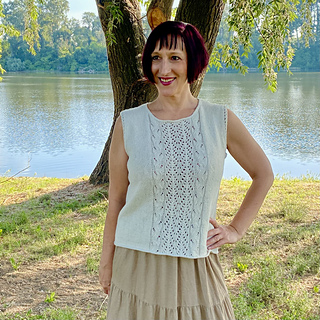
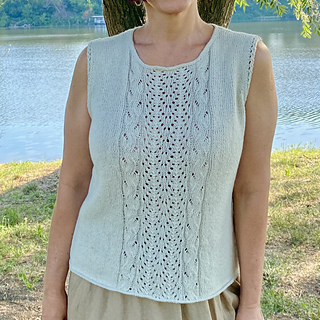
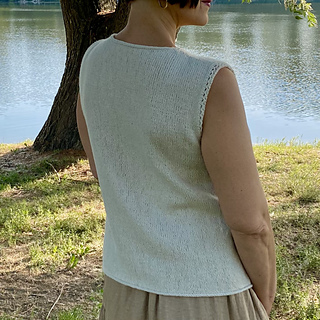
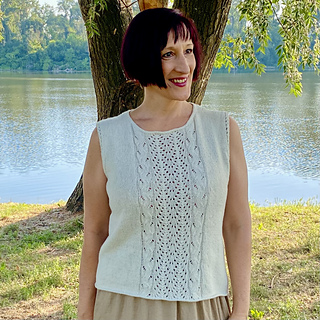
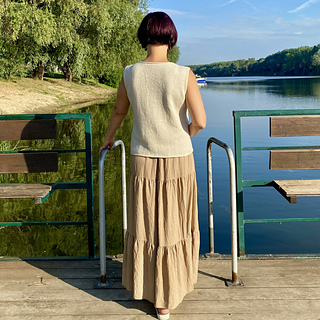
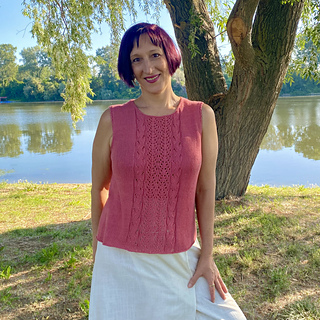
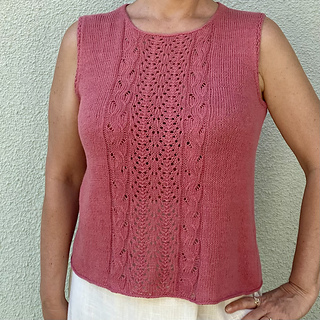
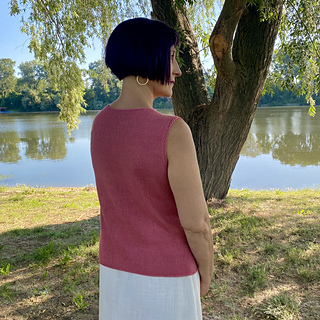
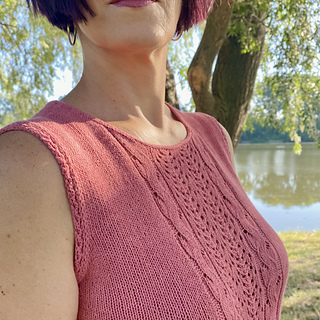
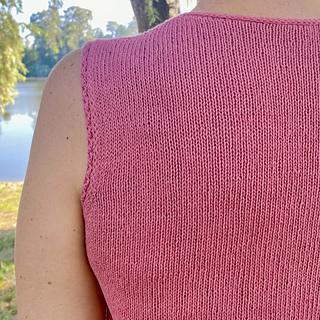
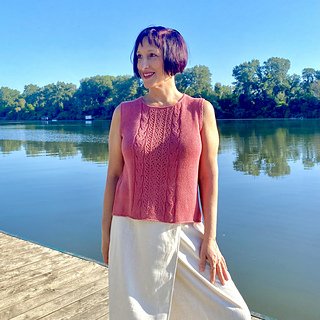
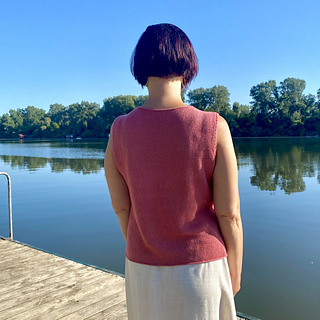
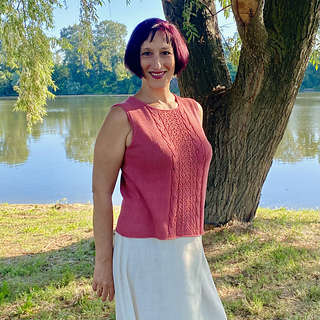
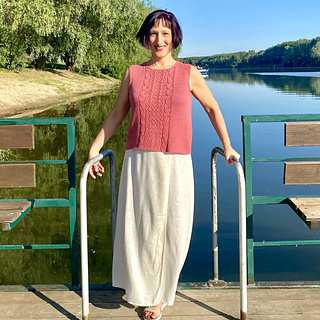
Lacefall Top

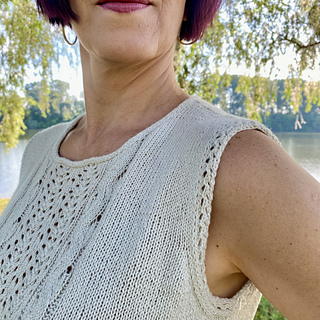
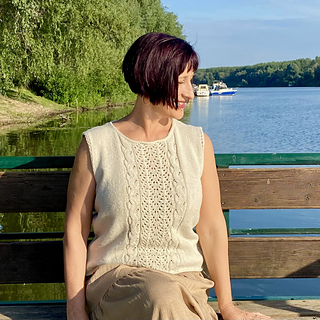
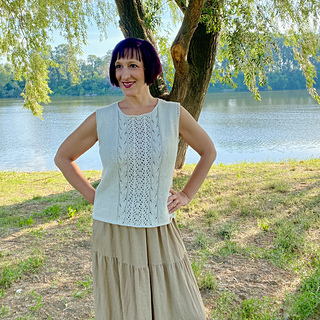
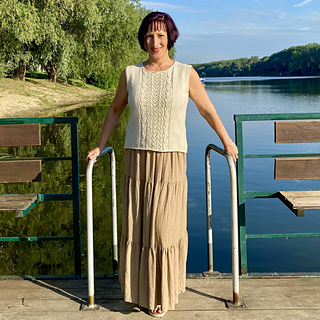
The Lacefall Top is a refined, feminine piece defined by a flowing lace panel along the centre front. Balanced by smooth stockinette stitch, the design feels both delicate and modern, with a quiet, understated elegance.
Soft shaping at the neckline and cleanly finished armholes create a flattering, easy-to-wear silhouette. Subtle details, including the I-cord neckline and fine lace edging around the armholes lend a considered, polished finish. With adjustable length, the Lacefall Top is designed to become a versatile staple for warm-weather dressing.
The top is designed to be worked in fingering weight yarn. For a cool and comfortable summer garment, plant-based fibres or blends such as cotton, linen, silk, bamboo or viscose are recommended.
CONSTRUCTION
Worked seamlessly from the top down, the Lacefall Top combines written instructions with a charted lace panel at the front.
The piece begins at the upper back, shaped with German short rows, then worked flat in stockinette with underarm increases. The fronts are worked separately from the shoulders, shaped with German short rows and neckline increases, before being joined where the lace panel is introduced.
Once the armhole depth is complete, the body is joined and worked in the round, maintaining the lace panel at the centre front. The neckline is finished with an I-cord edging, and the armholes are completed with a delicate lace edging.
The pattern was tech-edited by Marie-Eve Wedge and test- knitted by a wonderful group of knitters.
SIZING AND MEASUREMENTS
Sizes 1 (2; 3; 4) (5; 6; 7; 8) detailed below are designed to be worn with 2-7 cm / 0.75-2.75” positive ease at the full bust.
The samples are shown in size 2 with 5 cm / 2” positive ease at the full bust.
To fit bust: 80-85 (89-94; 100-105; 109-114) (118-123; 129-134; 139-144; 149-154) cm / 32-34 (35.5-37.5; 40-42; 43.5-45.5) (47.25-49.25; 51.5-53.5; 55.5-57.5; 59.5-61.5) inches.
If you are between sizes, choose the smaller size for a closer fit or the larger size for a slightly more relaxed fit, depending on your preference.
Finished bust circumference: 87 (96; 107; 116) (125; 136; 146; 156) cm / 34.75 (38.5; 42.75; 46.5) (50; 54.5; 58.5; 62.5) inches.
Cross back at shoulders: 35.5 (37; 38.5; 38.5) (38.5; 39.5; 41.5; 44) cm / 14.25 (14.75; 15.5; 15.5) (15.5; 15.75; 16.5; 17.5) inches.
Armhole depth: 18 (18.5; 20; 21) (21.5; 22.5; 23; 24) cm / 7.25 (7.5; 8; 8.5) (8.5; 9; 9.25; 9.5) inches.
Neckline circumference: 43 (45.5; 47; 48.5) (48.5; 51.5; 53; 55.5) cm / 17.25 (18.25; 18.75; 19.5) (19.5; 20.5; 21.25; 22.25) inches.
Body length from underarm - easily adjustable: 29 (32.5; 35; 36) (37.5; 38.5; 40; 41) cm / 11.5 (13; 14; 14.5) (15; 15.5; 16; 16.5) inches.
GAUGE
26 stitches and 38 rows = 10 cm x 10 cm / 4” x 4” in stockinette stitch worked flat and in the round, after blocking, using 3 mm / US 2.5 needles.
YARN
For my light red sample, I used Sandnes Garn Tynn Line (50 g = 220 m / 241 yards; 53% cotton, 33% viscose, 14% linen), in the 4335 – Brick Red shade.
For my off-white sample, I used BC Garn Bio Balance (50 g = 225 m / 246 yards; 55% wool, 45% cotton), in the 01 – Ivory shade.
You will need approximately: 540 (645; 760; 840) (940; 1055; 1165; 1285) m / 590 (705; 830; 920) (1030; 1155; 1275; 1405) yards of fingering weight yarn.
NEEDLES AND NOTIONS
- 3 mm / US 2.5 circular needles of 80 or 100 cm / 32” or 40” for the main fabric (the cord length depends on your chosen garment size).
- 2.5 mm / US 1.5 circular needles of 40 or 60 cm / 16” or 24” for the neckline I-cord, and the armhole lace edges (the cord length depends on your chosen garment size).
- Stitch markers
- Try-it-on tubing or waste yarn to place stitches on hold
- Tapestry needle
- Measuring tape
TECHNIQUES
- Long tail cast-on
- Backwards loop cast-on
- Knitting flat and in the round
- German short rows
- Picking up stitches
- Right- and left leaning increases
- Working lace from chart and written instructions
- I-cord bind-off
- Applied I-cord


 Ravelry download


 Cancel
15813 projects
stashed 10120 times
 stashed
7876 projects
stashed 6368 times