

 greenermakes' Ravelry Store
 Pattern


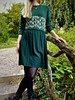
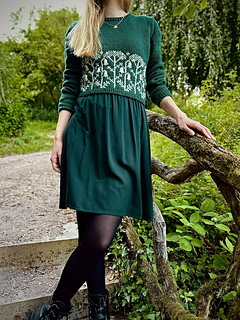
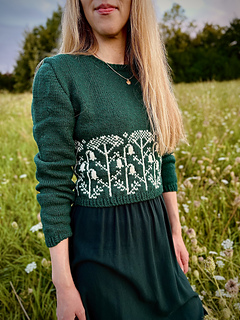
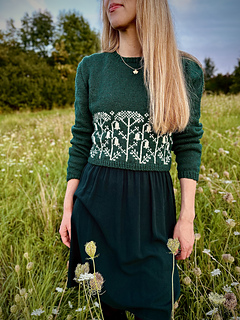
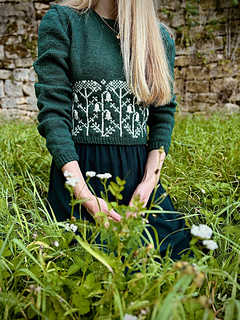
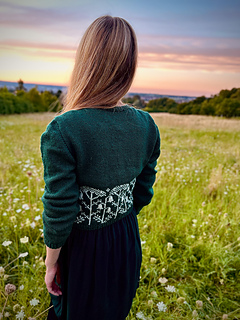
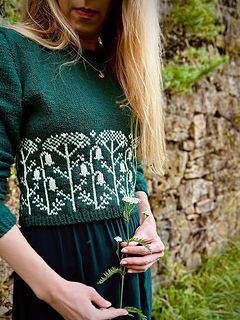
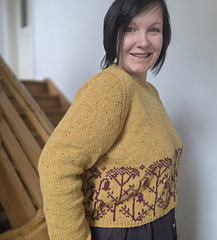
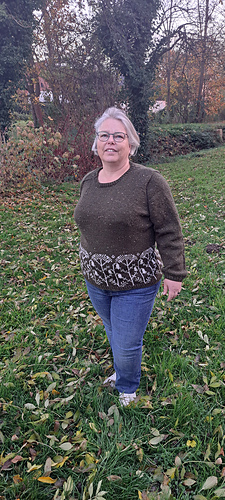
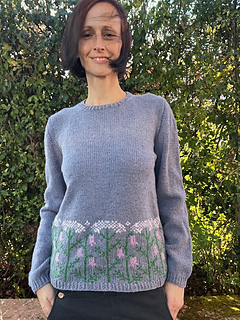
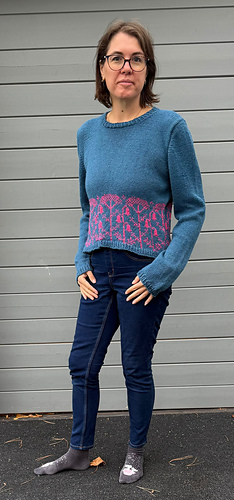
Let It Grow Sweater

Deutsch unten
Do you know your local flora? The names of the flowers you pass when walking by a meadow? The Let It Grow Sweater is meant to inspire you to discover their variety!
Native wildflowers – like yarrow or wild carrot and bellflower for Central Europe – are indispensable for the survival of countless insect species – and yet, all too often, they are mown away out of an excessive urge for tidiness, or never even reach flowering stage because of unnecessarily frequent mowing. My response to that is: why not just let things grow?
This pattern not only shows you how to make a wild meadow bloom as you knit, but also invites you to enter the enchanting world of wildflowers – it is packed with useful information, fun facts and practical tips. Let’s work together to make everything around us burst into colour! A sea of blossoms instead of a parched steppe, bee draws instead of ecologically useless cultivars, a butterfly paradise instead of a manicured lawn – it is in our hands!
This floral colourwork sweater with tapered sleeves is worked top-down in stockinette stitch, mostly in the round. It includes short rows for shoulder and sleeve shaping. My sample is cropped and I went down a needle size for gentle waist shaping, but the body length is completely customizable and you can also knit a longer version with a straight silhouette.
Level: intermediate
Sizes: A (B; C; D; E) (F; G; H; I)
bust circumference of finished garment:
80 (91.5; 103; 114.5; 126) (137; 148.5; 160; 171.5) cm / 31.5 (36; 40.5; 45; 49,5) (54; 58.5; 63; 67.5)”
to be worn with 5 to 15 cm (2 to 6”) of positive ease
Yardage:
Main colour: approx. 800 (870; 960; 1,100; 1,270) (1,370; 1,500; 1,650; 1,800) m / 870 (950; 1,050; 1,200; 1,390) (1,500; 1,640; 1,800; 1,970) yds
Contrast colour: approx. 80 (90; 110; 130; 140) (160; 180; 200; 220) m / 90 (100; 120; 140; 155) (175; 200; 220; 240) yds
Needles and notions:
- 4 mm (US 6) circular needles, 60–100 cm (24–40”)
- 3.5 mm (US 4) circular needles, 60–100 cm (24–40”) and (optional) DPNs for sleeves
- 3 mm (US 2.5) circular needles, 60–100 cm (24–40”) and 40 cm (16”) (neckband) and (optional) DPNs for sleeves
- scrap yarn, stitch holders or spare cords
- removable stitch markers, scissors, tapestry needle
Techniques (explained in pattern or video tutorial linked):
- German short rows
- picking up stitches
- backwards loop cast-on
- stranded colourwork in the round
- increases and decreases
- tubular bind-off (optional)
Note: Unfortunately, no test knitters could be found for sizes G–I. All sizes have been graded and edited with care. If you knit one of the aforementioned sizes and spot a significant error, please feel free to send an email to info@greenermakes.com and you will receive a refund.
Kennst du schon die Wilde Möhre? Die Gewöhnliche Wiesenschafgarbe? Die Acker-Glockenblume? Der Let It Grow Sweater möchte sie dir vorstellen!
Heimische Wildpflanzen wie Wilde Möhre, Schafgarbe und Glockenblume (egal ob Rund-, Nessel- oder Pfirsichblättrige, ob Acker- oder Knäuel-Glockenblume) sind unverzichtbar für das Überleben unzähliger Insektenarten – und trotzdem werden sie oft aus übermäßigem Ordnungsdrang weggemäht oder gelangen durch unnötig häufiges Mähen gar nicht erst zur Blüte. Da denke ich mir: Lass doch einfach mal wachsen!
Diese Anleitung zeigt dir nicht nur, wie du beim Stricken eine wilde Wiese erblühen lässt, sondern nimmt dich mit in die zauberhafte Welt der Wildblumen – mit Wissenswertem, Fun Facts und nützlichen Tipps. Lass uns gemeinsam dafür sorgen, dass es überall um uns herum bunt erblüht! Schafgarbenmeer statt vertrockneter Steppe, Glockenblume statt Geranie, Schmetterlingsparadies statt englischem Rasen – wir haben es in der Hand!
Dieser florale Colourwork-Pullover wird von oben nach unten glatt rechts gestrickt, größtenteils in der Runde. Schultern und Ärmel werden mit verkürzten Reihen geformt. Mein Beispielpullover endet auf Taillenlänge und ich habe die Nadelstärke für das Colourwork reduziert, um eine leichte Taillierung zu erhalten. Du kannst die Länge aber frei anpassen und auch einen langen Pullover mit gerader Silhouette stricken.
Level: mittleres Erfahrungslevel
Größen: A (B; C; D; E) (F; G; H; I)
Brustumfang des fertigen Pullovers: 80 (91,5; 103; 114,5; 126) (137; 148,5; 160; 171,5) cm
mit 5–15 cm Mehrweite konzipiert
Garnverbrauch:
Hauptfarbe: ca. 800 (870; 960; 1.100; 1.270) (1.370; 1.500; 1.650; 1.800) m
Kontrastfarbe: ca. 80 (90; 110; 130; 140) (160; 180; 200; 220) m
Nadeln und weitere Materialien:
- Rundstricknadel 4 mm, 60–100 cm
- Rundstricknadel 3,5 mm, 60–100 cm, und (wenn gewünscht) Nadelspiel (Ärmel)
- Rundstricknadel 3 mm, 60–100 cm und 40 cm (Halsbündchen) und (wenn gewünscht) Nadelspiel (Ärmelbündchen)
- Restgarn oder Maschenraffer
- Maschenmarkierer, die sich öffnen lassen, Schere, Vernähnadel
Stricktechniken:
- verkürzte Reihen
- Maschen aufnehmen
- Daumenanschlag
- Colourwork in Runden
- Zunahmen und Abnahmen
- italienisch abketten (optional)
Hinweis: Für Größen G–I konnten leider keine Teststricker:innen gefunden werden. Alle Größen wurden sorgfältig geprüft. Falls du eine der genannten Größen strickst und dir ein inhaltlicher Fehler auffällt, schreibe gern eine E-Mail an info@greenermakes.com und du bekommst den Preis der Anleitung erstattet.


 Ravelry download


 Cancel

3 projects
stashed 13 times
 stashed


