

 Pia Trans' Ravelry Store
 Pattern


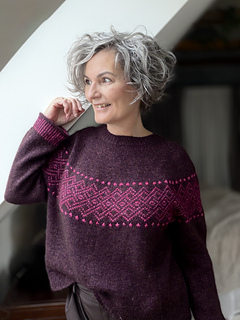
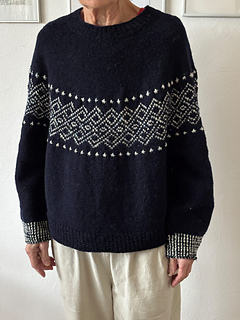
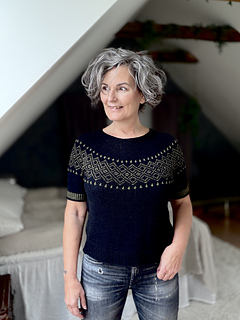
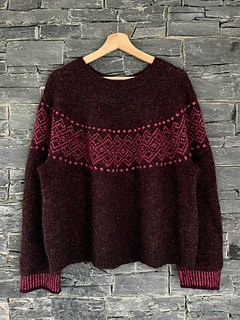
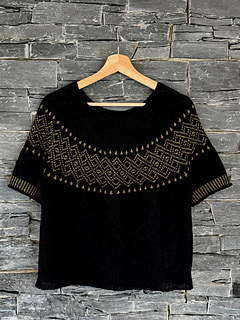
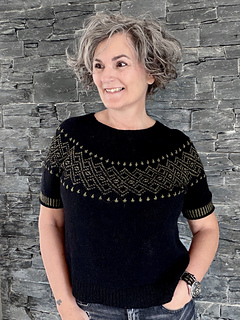
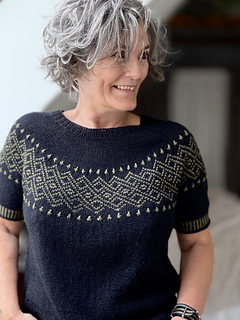
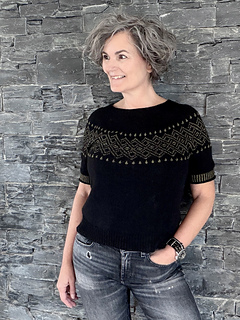
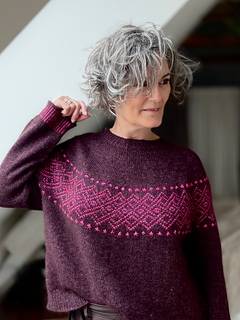
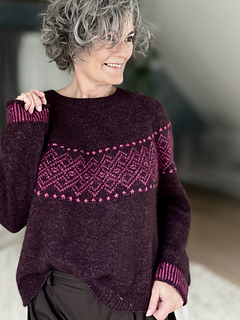
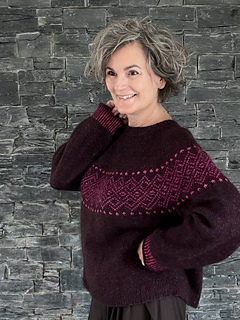
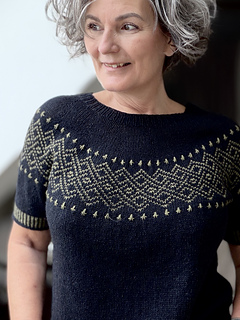
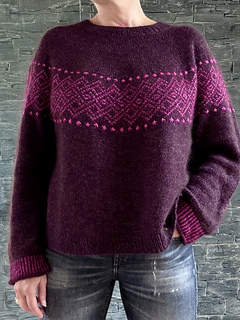
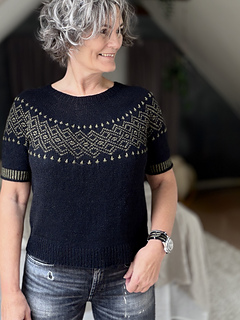
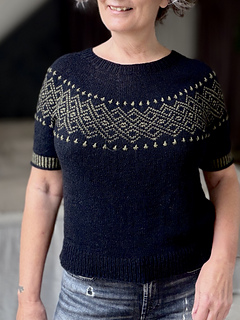
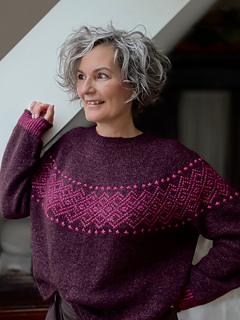
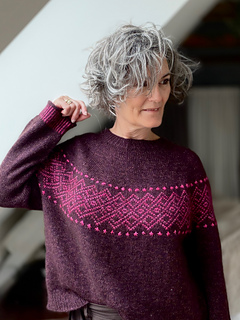
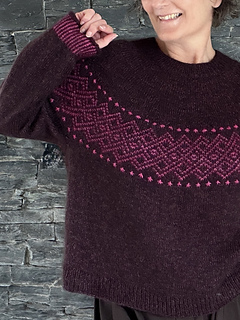
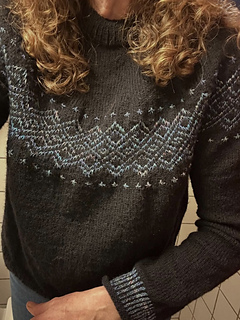
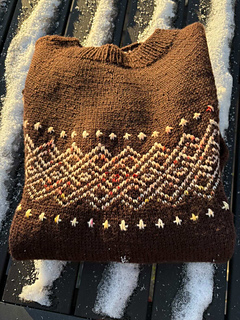
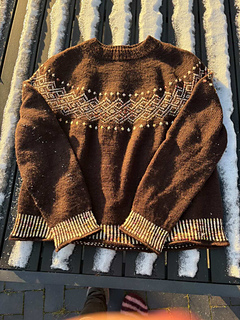
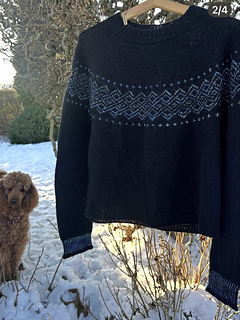
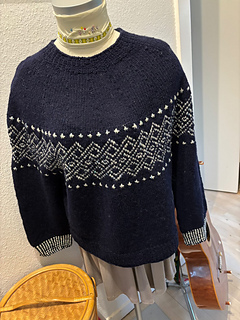
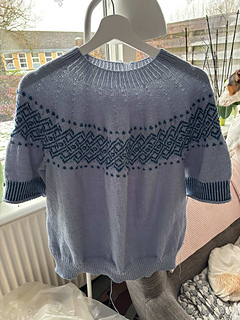
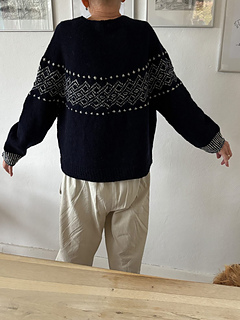
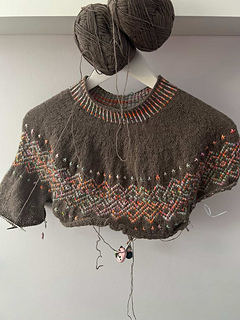
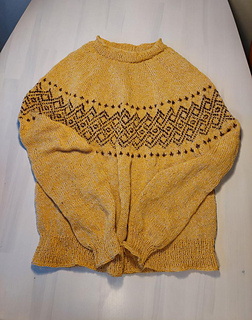
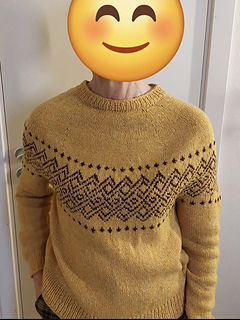
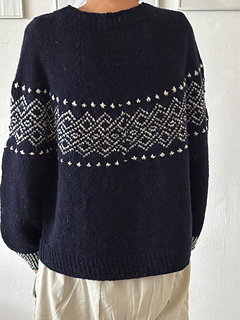
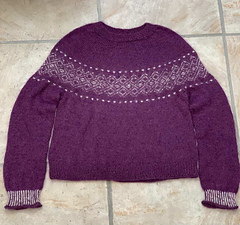
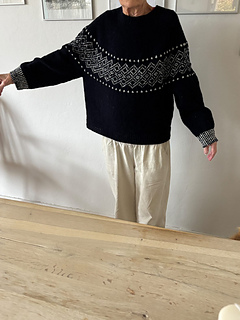
Sannes Kat no. 9

Use code Knitathon at check-out for 25 % discount! Code is valid through to the end af the Spring Knitathon 2026.
Kat no. 9 is designed for our 9th Knitathon, in collaboration with a dear friend, a generous companion, and an amazing fiber artist, Sanne. Without her, this pattern would never have seen the light of day, so I asked her permission to put her name on it. Sanne is sadly no longer with us, but I hope all her many friends will enjoy her last work for the fiber community.
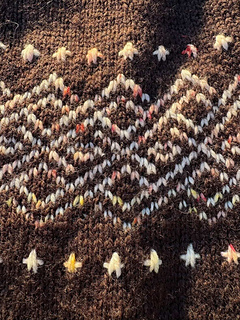
The colorwork on this model came to me in early 2020 when I for the first time found myself trying to navigate the highways in the Dallas/Fort Worth area. I was scared (to say the least). These roads presented themselves with up to 16 lanes, in 4 layers and a multitude of twists and turns – and I was supposed to drive on them…?
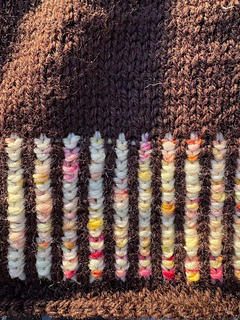
I have tried two times earlier to use the pattern in knitwear but was never able to get the fit I wanted with the rather larger repeat, but now I have finally found the solution. The combination of wave-like increases (much like the ones I often use for top-down hats) and the sections with cross stitches gave me the rapid increases necessary, while allowing the increases to actually be part of the pattern.
Because this Knitathon took place in the transition from winter to summer, I decided to make both a winter and a summer version; a cozy sweater and a breezy tee. You can knit a sweater or a tee, or a combination of the two – the pattern gives you free hands to create exactly what you want!
Sizes: 1-2-3 (4-5-6) 7-8
Bust circumference on finished garment: 86-99-110 (124-134-142) 154-160 cm / 33.9-38.9-43.3 (48.8-52.8-56) 60.6-63 inches
Length: 54-55-56 (57-58-59) 59-59 cm / 21.3-21.7-22 (22.4-22.8-23.2) 23.2-23.2 inches
Fit: The sweater version has a deeper yoke, long sleeves and a straight body. The tee version has a shorter yoke, short sleeves and a bit of waist shaping. You can of course combine the two, to make a sweater with a shorter yoke, a tee with straight body, or whatever you want! Any changes will of course affect the yardage.
The tee version is intended to be worn with less ease than the sweater version.
Kat no. 9, sweater version is intended to be worn with 10-25 cm / 4-10 inches positive ease, slightly less in the larger sizes.
Kat no. 9, tee version is intended to be worn with 5-10 cm / 2-4 inches positive ease.
The measurements are given for the finished garment, so you can choose the size depending on your personal preferences.
Yardage
Winter sweater version:
Main color (fingering weight):
900-1050-1300 (1550-1700-1850) 2000-2200 meter lace weight Ito Kosho (25 gr / 175 m), to be held with an equal amount of Ito Sensai (20g / 240 m)
Contrast color (fingering weight):
100-150-150 (200-200-200) 250-270 meter lace weight Ito Kosho (25 gr / 175 m), to be held with an equal amount of Ito Sensai (20g / 240 m)
The sample uses:
Ito Kosho Blackberry, held with Ito Sensai Coke for the main color and
Ito Kosho Rose, held with Ito Sensai Azalea for the contrasting color
Summer tee version:
Main color (fingering weight):
800-900-1100 (1300-1500-1700) 1850-2000 meter Ito Shimo (50 gr / 266 m)
Contrast color (fingering weight):
100-150-150 (200-200-200) 250-270 meter Ito Shimo (50 gr / 266 m)
The sample uses:
Ito Shimo Black for main color
Ito Shimo Olive for main color
Suggested needles
3.25 mm circulars, 80 cm for ribbing (use magic loop where needed)
3.75 mm circulars, 80 cm for body (use magic loop where needed)
Please note: Needle size is ONLY a suggestion – always use the needle required to get gauge!
Gauge
23 stitches x 31 rounds in stockinette stitch on larger needles = 10 x 10 cm / 4 x 4 inches after blocking. Always use the needle size that will give the correct gauge!
Pay extra attention to your gauge when working the sleeves. Many knitters will tend to have a tighter gauge when working in a smaller circumference. If this is true for you, please adjust your needle size accordingly, by going up one or two sizes. The same may be true for the colorwork section – pay attention to your gauge and go up a needle size if necessary.
Also, when working flat (during the short row sections), pay attention to your gauge. Our purls are often looser than our knit stitches. You may want to use a smaller needle tip for the purl rows.


 Ravelry download


 Cancel