

 Hanne Daniels' Ravelry Store
 Pattern


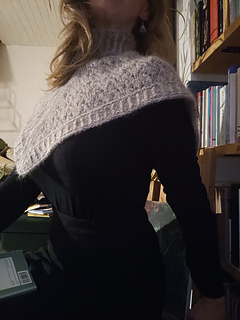
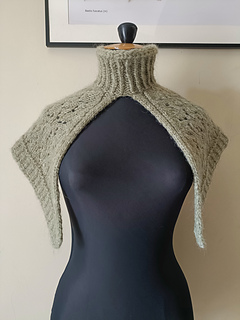
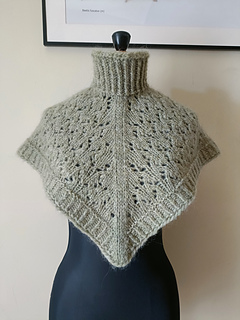
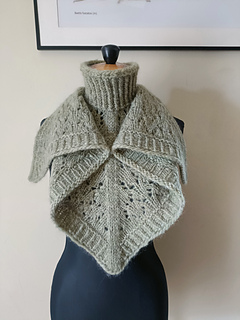
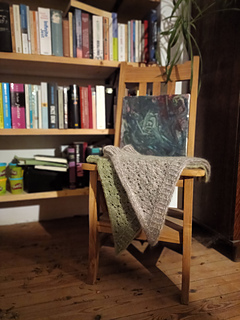
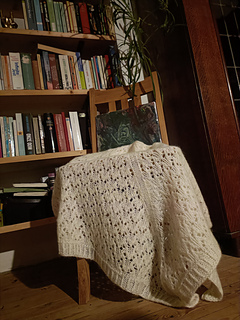
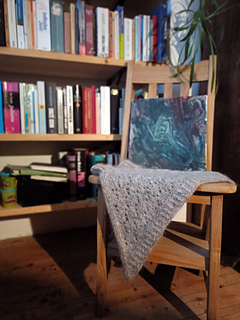
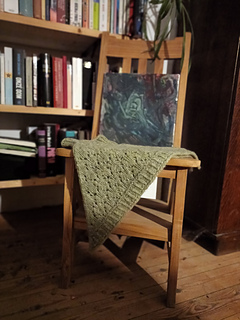
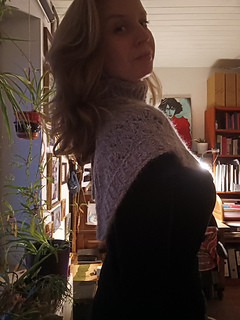
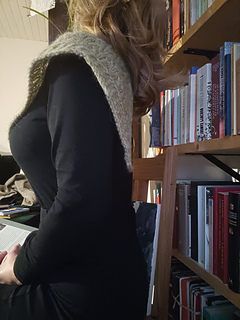
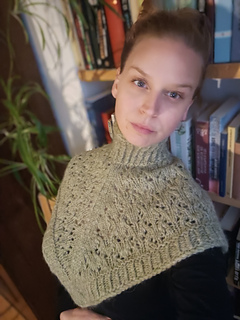
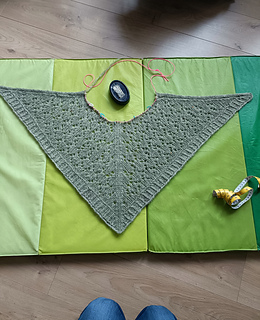
Victoria Hull

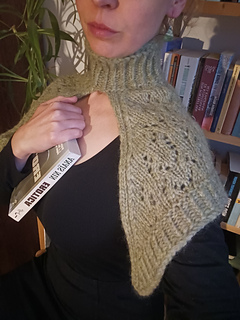
Imagine a modern cowl traveling back in time, to Victorian
England, making love to a lace collar.
This would be their love child.
This accessory is knit bottom up, you start at the widest point of the shawl: the border.
The longer you knit, the less stitches per round, the faster it goes!
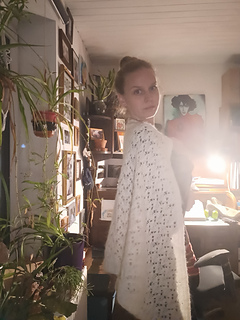
It starts out as a regular triangular shawl, but instead of finishing it as a shawl, we join it in the round and add a collar. (Which you can easily omit and just finish it as a triangular shawl!)
At the end, you only have four ends to weave in. Heavenly simplicity.
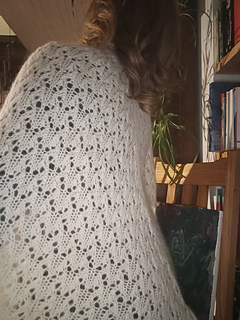
The lace pattern is SO easy to memorize AND to read from your knitting. Otherwise I wouldn’t do it, because I’m no hero at lace. :slightly_smiling_face:
This pattern has no sizing, since you will be knitting it to your exact body measurements and preference of the length of the finished project. A step-by-step guide on how to take your measurements and calculate the amount of stitches and repeats you need is provided in the pattern. I added a structured ‘note pad’ page with all the (simple!) formula’s.
Yarn Requirements, needles, notions and gauge
Yarn:
Two strands of an unspun yarn, a DK to aran weight yarn, or similar to obtain gauge.
The sample was knit in Nutiden (Honer Och Eir ), two strands held together.
For a lighter version combine one stand of Nutiden + one strand of (no-kill) silk/mohair.
Total weight of the sample after wash in g is 104g. (= A bit more than one plate)
Needles:
- 6,5 m m, circular needles;
- Cord adjusted to the ‘size’ you want to knit. I used an 80cm cord.
Notions:
- 2 + 2 + 16 stitch markers (3 different colours) I use markers made out of scrap yarn;
- Blocking mat + blocking pins. I use an old gym mst and regular pins;
- Darning needle;
- Barber cord or scrap yarn.
Gauge (after blocking):
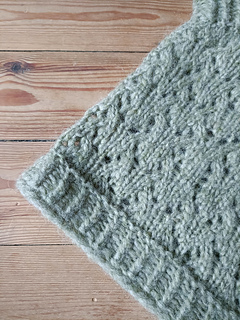
- Lace: 12 sts and 23 rows / 10 cm -> 7 cm (width) for 1 repeat (= 8 sts);
- Ribbing: 11 sts / 10 cm
The pattern includes
- pictures and diagrams
- written descriptions
- charts
- list of used techniques and abbreviations
- detailed instructions for customisation
- contact information for pattern support
How to get started
Adventurous beginner knitter: read through the whole pattern and make the swatch!
Take out the pages of charts and the page with abbreviations, to make it easier for you to consult. Look up the techniques you do not already know.
Perfectionist advanced knitter : read through the whole pattern, make the swatch, play around and adjust. It might be handy to take out the chart pages.
Nonchalant advanced knitter : look at the pictures, charts and the CO number. Now GO, GO, GO!!
Happy knitting!


 Ravelry download


 Cancel
10128 projects
stashed 13209 times
 stashed