

 Léa Loiseau's Ravelry Store
 Pattern

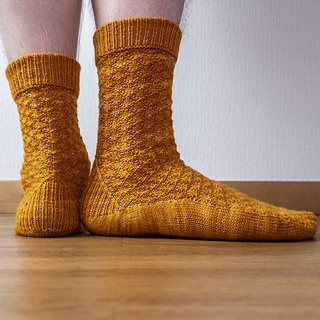
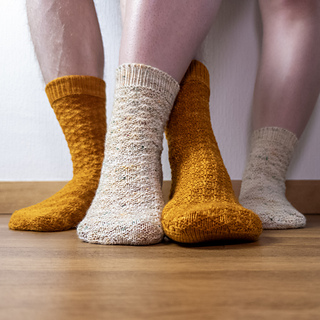
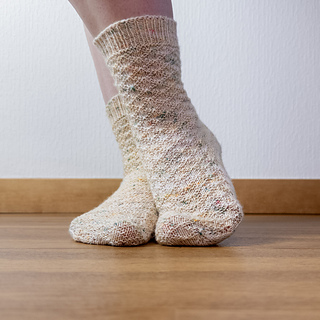
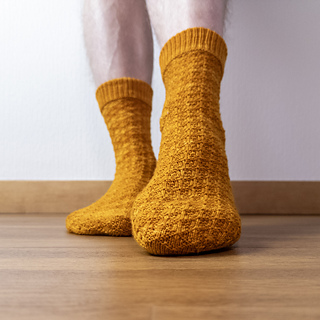
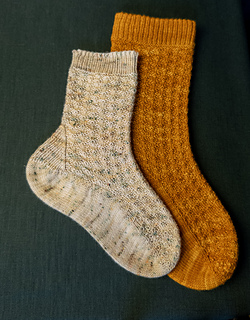
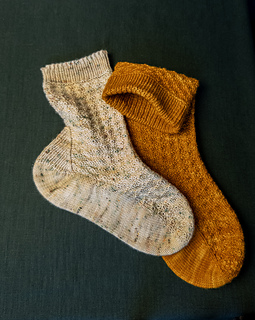
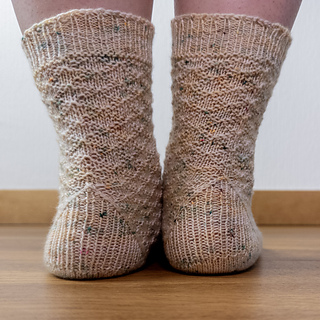
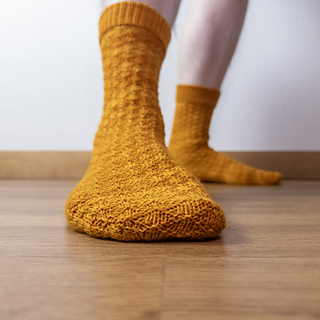
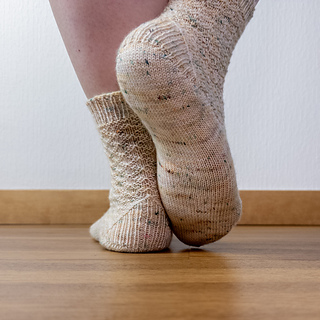
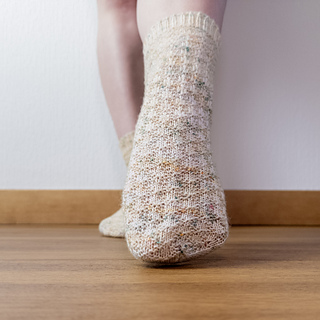
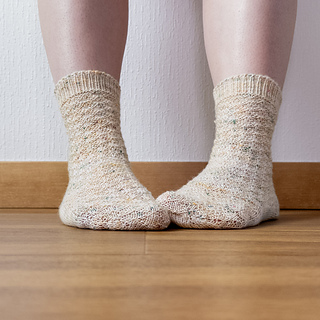
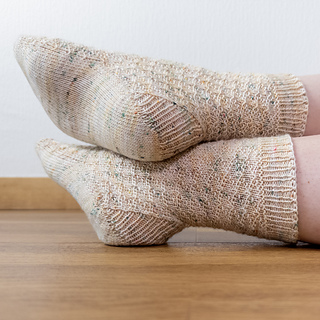
Viterbi Socks

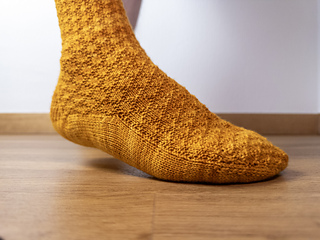
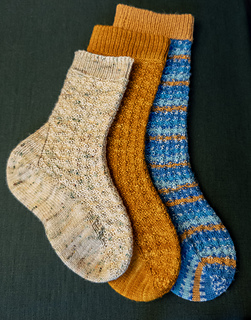
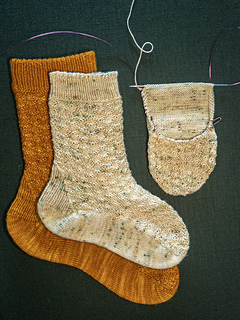
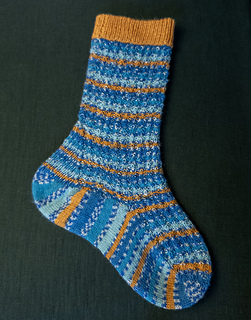
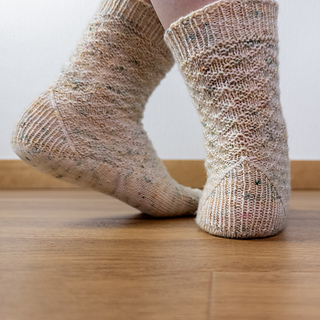
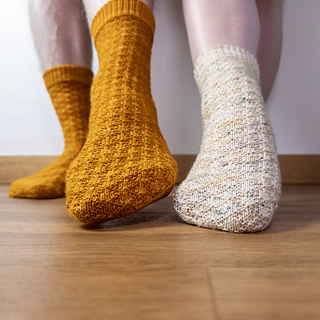
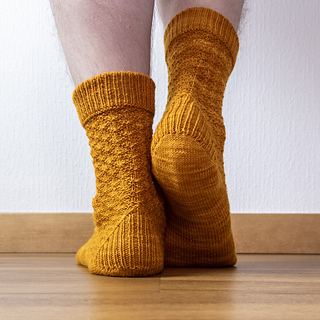
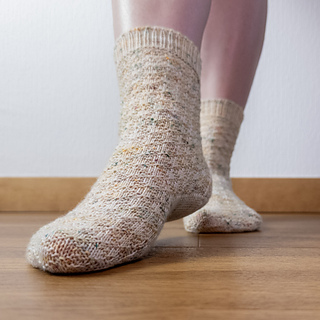
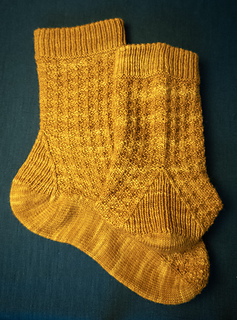
The Viterbi socks are worked toe-up in an easily memorized diamond texture, inspired by the trellis structure of the namesake algorithm.
Two sets of short rows shape the sole and the heel before transitioning into a triangular ribbed gusset worked in the round, preserving the continuity of the motif throughout the rest of the sock.
The pattern has been test-knit and professionally tech-edited.
Gauge
36 stitches and 44 rows = 10 cm / 4 inches in stockinette stitch.
Difficulty Level
This pattern is designed for intermediate knitters and adventurous beginners.
While only basic stitches are used, the sock construction is unusual.
The pattern does not require you to be able to read your knitting, but relying solely on row tracking may feel cumbersome. The texture itself is simple and easily memorized; recognizing it as you work makes for a smoother experience.
Familiarity with German short rows is also recommended
Techniques
- Judy Magic Cast On
- Purl and Knit m1 increases
- ssk/k2tog/sk2p decreases
- German Short Rows
- Jeny’s Surprisingly Stretchy Bind Off (or any stretchy BO of your choice)
- Kitchener’s stitch (if working doubled up cuff)
Sizing
Choose the size closest to your widest feature, aiming for 10% of negative ease in width. The foot and leg lengths are adjustable. For foot length, ease should range from 10% negative ease to no ease, depending on your fit preference.
Foot: 50, 58, 66, 74, 82 sts / 13.9, 16.1, 18.3, 20.6, 22.8 cm / 5 1/2, 6 1/2, 7 3/8, 8 1/4, 9 1/8 inches
Leg: 48, 56, 64, 72, 80 sts/ 13.3, 15.6, 17.8, 20, 22.2 cm / 5 3/8, 6 1/4, 7 1/8, 8, 8 7/8 inches
Materials
The socks are worked toe-up, allowing the leg length to be adjusted to suit the yarn available. Plan on approx. 100 g / 400 m for a standard leg length; the largest sizes with a longer leg may require up to 150 g / 600 m.
If working a contrasting cuff, you’ll need roughly 10g / 40 m for a standard cuff and the 20g / 80 m for a doubled cuff.
Solid, tonal and speckled yarn will be best to show off the texture.
Consider splitting your yarn into two, or ensure that the first sock uses no more than half.
Needles
2.25 mm / US 1 needles for the sock body or the needle size needed to achieve gauge. Use needles 1 to 2 sizes smaller for the cuff (optional).
The pattern is written to be needle-agnostic. Use your preferred method to knit small circumferences, but note that if you are using small circulars, you will need another method to start the toe.
Notions
- Tapestry needle
- Stitch markers (at least 4 distinguishable ones)
- If knitting the folded cuff, an additional set of needles (any size up to the gauge needle size)


 Ravelry download


 Cancel
22718 projects
stashed 16109 times
 stashed
5 projects
stashed 6 times
1 project
stashed 2 times