

 Esti Juango's Ravelry Store
 Pattern


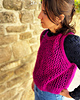
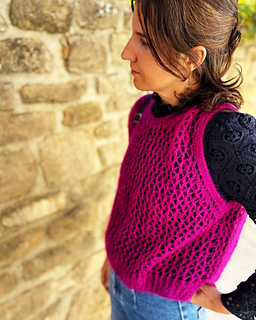
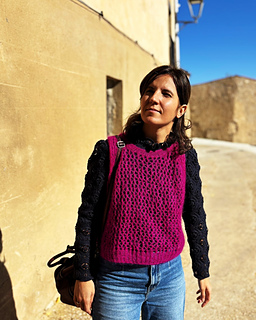
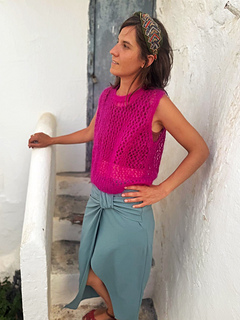
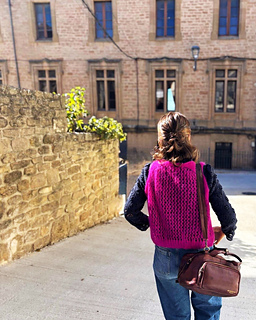
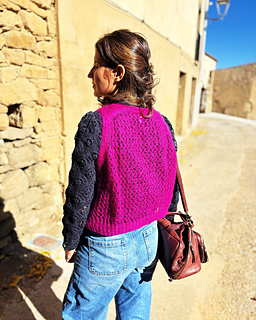
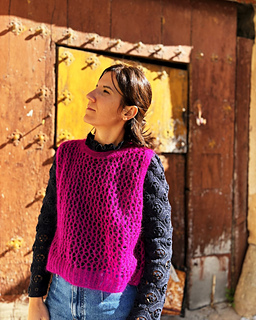
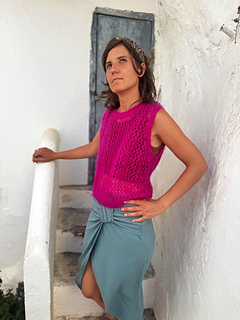
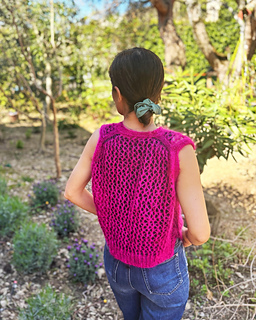
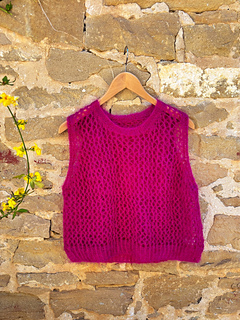
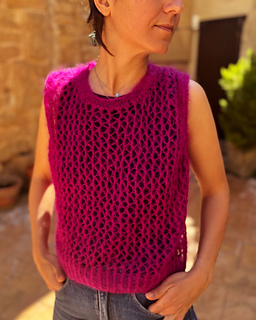
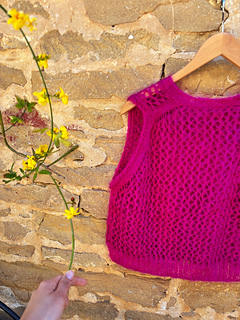
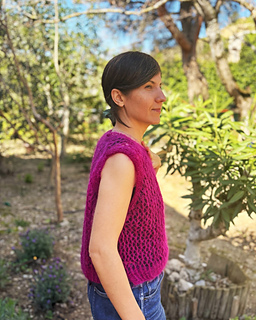
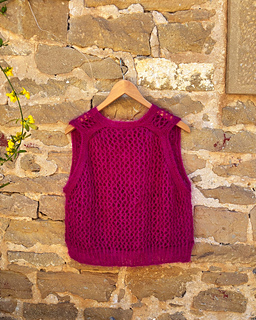
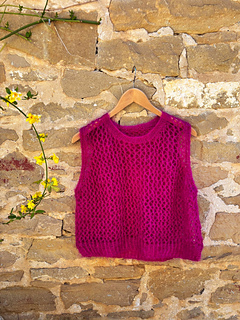
Xune


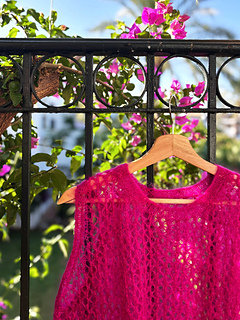
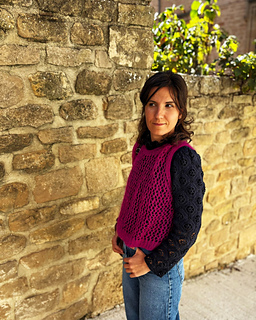
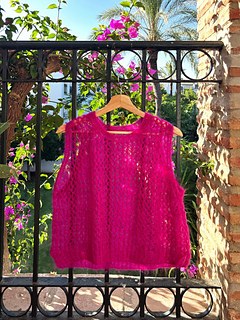
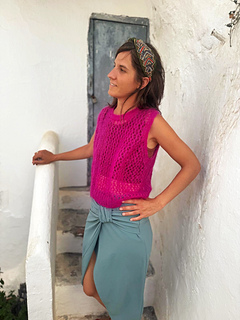
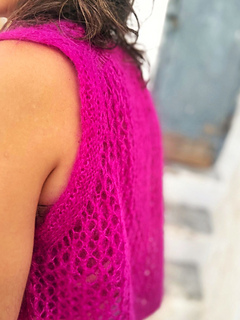
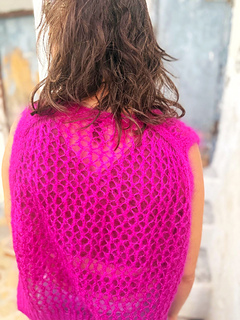
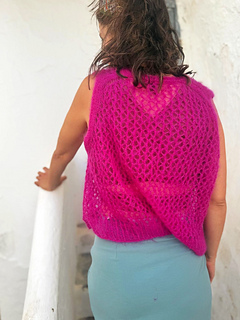
A lightweight mohair vest with delicate lace, designed to enjoy knitting throughout the year. A versatile, easy-to-style garment with an enjoyable knitting experience.
Inspiration
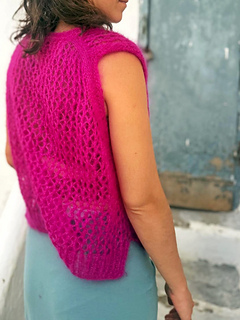
Xune is a lace pattern designed to showcase mohair even in spring and summer. With a simple combination of lace motifs throughout the garment, it creates an airy and unique texture. Xune is named after a little goat born into the Areta herd of @bilobila.
Difficulty Level
Intermediate level. Skills required: knit and purl, working increases and decreases on the right side of the fabric, and knitting in the round.
Pattern has been tech edited and tested.
Sizes
1 (2, 3, 4, 5) ( 6, 7, 8, 9) with final bust circumference measurement of the top after blocking of 89 (101.5, 111, 120, 132.5) (141.5, 151, 160, 169) cm/ 35 (40, 43.75, 47.25, 52.25) (55.75, 59.5, 63, 66.5)” . A positive ease of 10-15 cm/ 4-6” is recommended.
Materials
- Yarn: Bilobila “Beta” – 25 gr; 120 m (132 yds). 77% superkid mohair, 23% silk.
- Amount: 2 (2, 2, 3, 3) (3, 4, 4, 4) skeins.
- Total in m: 240 (240, 240, 360, 360) (360, 480, 480, 480) m
- Total in yds: 264 (264, 264, 396, 396) (396, 528, 528, 528) yds
- Circular 5 mm (US 8) needles to work in the round the body
- Circular 4.5 mm (US 7) needles for the collar and sleeves
- Markers. A different BOR marker. 4 locking markers
- Stitch holders
- Tapestry needle
Gauge
In a 10x10 cm (4x4 in) gauge you should have 13 sts and 19 rounds worked with larger needles in the round in Lace pattern.
Construction notes
The top starts at the back. It is knitted starting at the back of the neck and working down to the armholes. The stitches are then picked up to knit the front from the top-down.
Front and back are then joined and worked in the round to desired length while working the lacework chart on page 1. The neck opening is finished off.
The pattern consists of the following sections:
Back
1.1 Cast on to shoulder width
1.2 Straight knitting and armhole increases to reach bust width
Front
2.1 Left front shoulder
2.2 Right front shoulder
2.3 Join fronts
Join back and front. Work in the round
Finishings
-----Español/Spanish-----
Un chaleco ligero de mohair con un delicado calado para disfrutar del punto durante todo el año. Un diseño versátil, fácil de combinar y entretenido de tejer.
Inspiración
Xune es un patrón de calados destinado a lucir el mohair también en primavera verano. Con una combinación sencilla de calados a lo largo de la prenda crearemos una textura vaporosa y única. Xune da nombre una cabrita nacida en el rebaño de Areta de @bilobila.
Nivel de Dificultad/ Requisitos previos
Nivel intermedio. Saber tejer derecho, revés. Hacer aumentos y disminuciones por el lado derecho de la labor y el tejido en circular.
El patrón ha sido testeado y editado técnicamente.
Tallas
1 (2, 3, 4, 5) ( 6, 7, 8, 9) con contorno de pecho en prenda bloqueada de 89 (101.5, 111, 120, 132.5) (141.5, 151, 160, 169) cm. Se recomienda una holgura positiva de unos 10-15 cm.
Materiales
- Hilo: Bilobila “Beta” – 25 gr; 120 m (132 yds). 77% superkid mohair, 23% seda.
- Cantidad: 2 (2, 2, 3, 3) (3, 4, 4, 4) ovillos.
- Total en m: 240 (240, 240, 360, 360) (360, 480, 480, 480) m
- Agujas circulares de 5 mm para el top
- Agujas circulares de 4.5 mm para el acabado del cuello y sisa
- 4 marcadores tipo imperdible
- Imperdible o hilo adicional para dejar puntos en espera
- Aguja lanera
Tejido de Muestra
En una muestra tejida en circular de 10 x 10 cm en la muestra de calado obtendrás 13 puntos por 19 vueltas con la aguja de mayor grosor.
Notas de construcción
La prenda se inicia en la parte trasera. Se teje iniciando en la parte trasera del cuello hacia abajo hasta llegar a la sisa. Se recogen los puntos para tejer la parte delantera de arriba abajo. Se da forma al escote y se trabaja el calado de la pág 1 simultáneamente hasta llegar al bajo de la sisa.
Se une el delantero y trasero y se trabaja en circular hasta la longitud final deseada. El patrón consta de las siguientes secciones:
Trasero
1.1 Montaje de puntos hasta alcanzar anchura de hombros
1.2 Tejido recto y curvatura de sisa hasta alcanzar anchura pecho
Delantero
2.1 Hombro delantero izquierdo
2.2 Hombro delantero derecho
2.3 Unión delanteros hasta sisa
Unión delantero y trasero. Tejer en circular
Acabados


 Ravelry download


 Cancel

 stashed


