

 The Knit Purl Girl Website
 Pattern

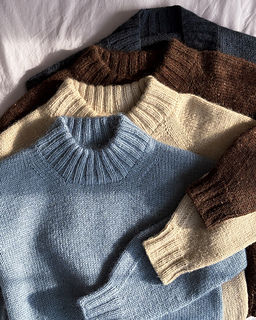
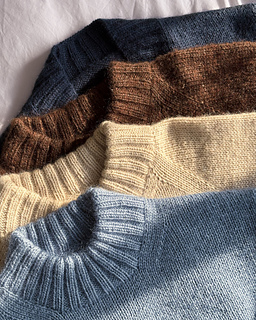
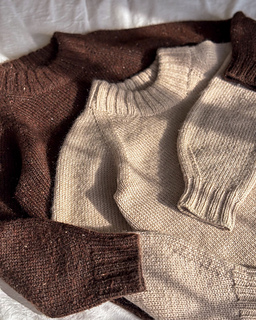
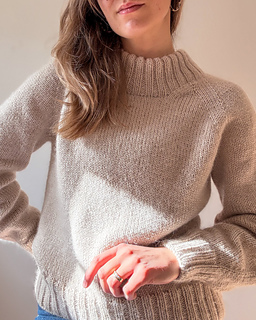
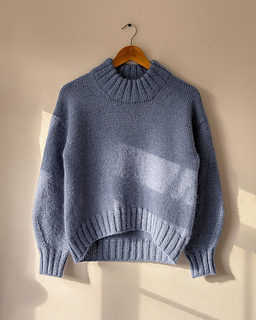
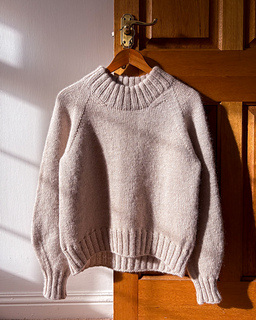
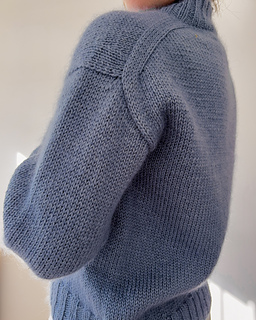
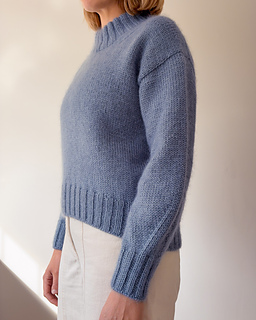
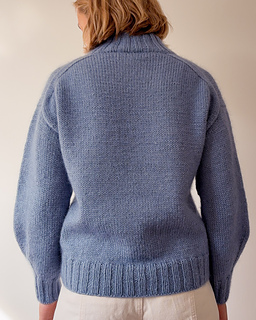
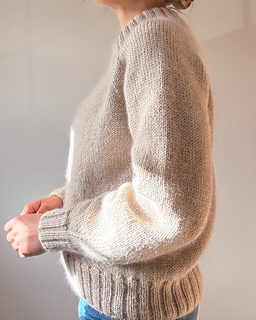
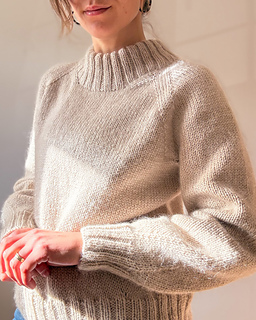
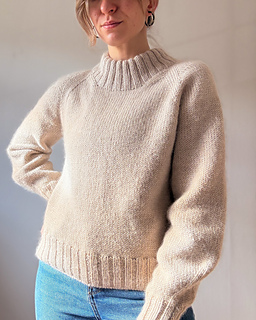
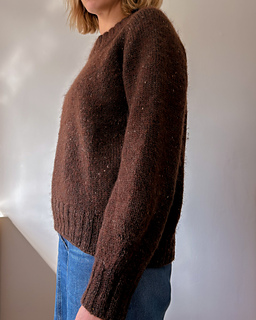
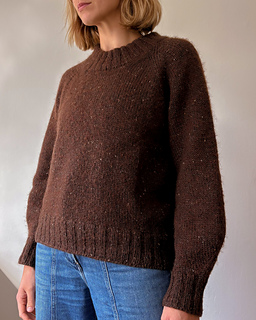
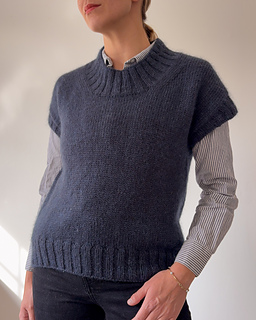
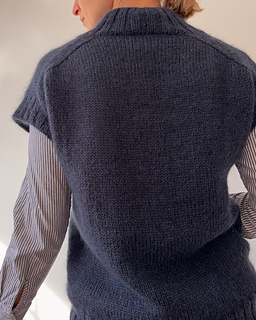
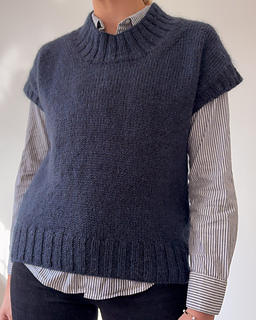
Cove Sweater/Raglan


Enjoy 25% off all patterns until Wednesday 30 September at 11:59 pm BST, no code needed. Happy knitting!
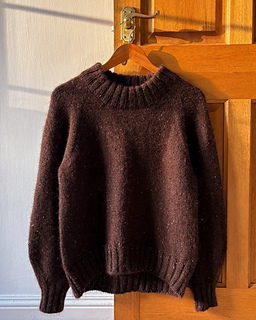
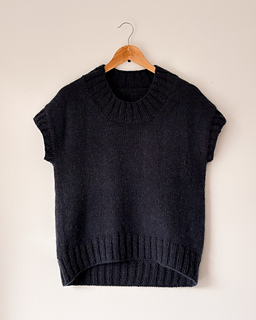
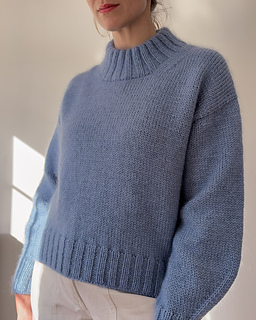
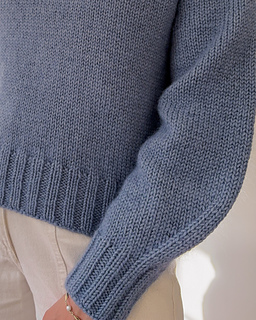
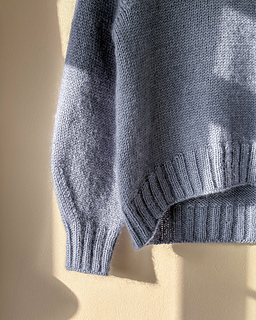
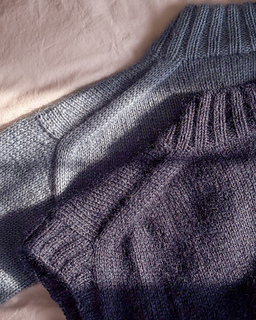
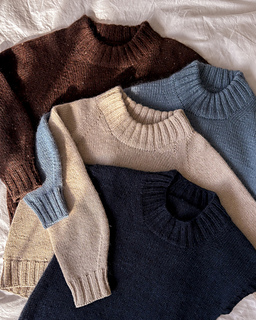
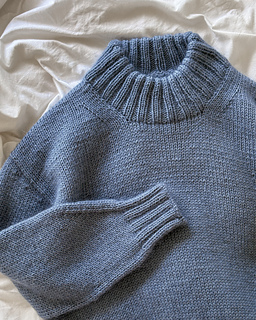
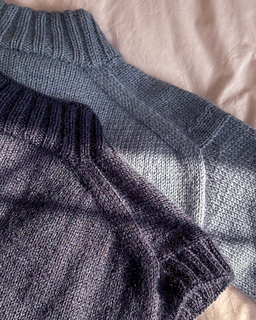
This listing includes the Cove Sweater and the Cove Raglan. Much of the design is the same across the two iterations of the design, but the Cove Sweater is a drop shoulder design with a European shoulder construction, worked top-down. It is finished with lots of 2x2 rib, a curved hem shaped with short rows, and distinctive tapered cuff shaping. I think the clean, graphic lines of the original design lends themselves really well to a raglan yoke and I hope you enjoy the added option. There are also notes on modifying the pattern to be a Vest in the Sweater pdf.
I first released this pattern in November 2023 and, over the years, it’s been one of the hardest working pieces in my knitted wardrobe. I revisited the design in late 2025 when I started to work on a raglan version of the pattern and, realising that my tension had changed quite dramatically over the years, I thought it would be a good idea to update the original Cove Sweater too.
Please note that this pattern was update in late September 2026. The original version will remain live on Ravelry until 2 October 2026, after which point I will delete that pdf from the listing. If you would prefer to work from the original version of this pattern, please email me at the.knit.purl.girl2020@gmail.com and I’ll happily share the pdf with you.
For the drop shoulder sweater, you will begin by casting on stitches to form the back panel, which is shaped with leaning increases on the right and wrong sides of the work. You will work to a certain length, and then most sizes will work some underarm shaping to improve the cross-shoulder and cross-chest fit. When the back panel is complete, you will pick up and knit stitches to form the left and right shoulders in turn. Once the neckline shaping is done, you will connect the shoulders by casting on new stitches between them to form the front panel, which features the same underarm shaping as the back panel.
For the raglan sweater, you will begin by casting on stitches for the back and sleeves, initially working flat. You will then begin to work raglan increases to shape the yoke, before also starting to work some neckline shaping. Once the neckline shaping is complete, you will join your work in the round whilst continuing to work raglan increases at various rates to ensure a good fit across the size range.
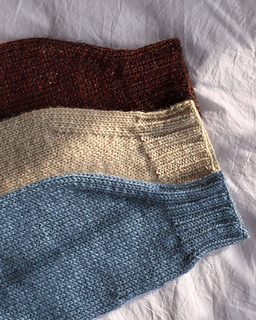
For both versions, when the yoke is complete, you will work the length of the body and then do some short-row shaping to create a curved hem before working the hem in 2x2 rib. From there, I recommend that you apply the 2x2 rib folded collar, as this will give you a better sense of how the sleeves will sit. Finally, you will work each sleeve in turn with minimal shaping, as most of the shaping comes just before the cuff to create a graphic tapered shape before the 2x2 rib cuff.
Cove Sweater (drop shoulder/vest)
Materials and Fit
Notions: You will need 4 mm / US 6 circular needles with 40-, 60- and/or 80-cm / 16- and 24- and/or 32-in cords; 5 mm / US 8 circular needles with 40- and 60- or 80-cm / 16- and 24- or 32-in cords. If you’re making one of the larger sizes, you may also find it helpful to have both needles with a 100-cm / 40-in cord.
You will also need at least 3 ring stitch markers, your preferred stitch holder (i.e., scrap yarn, a set of spare needles, or a cord), a darning needle, and you may find some clip-on markers helpful to track your work.
Tension: 17 stitches x 24 rows/rounds in Stockinette Stitch on 5 mm / US 8 needles = 10 x 10 cm / 4 x 4 in.
Sizing and ease: The Cove Sweater has a recommended positive ease of 14-20 cm / 5.5–8 in for Sizes A-H, and 9.5-20.5 cm / 3.75-8 in for Sizes I-L. However, if you wanted less ease, you would be welcome to choose a smaller size relative to your chest measurement and vice versa.
Size: A (B) C (D), E (F) G (H), I (J) K (L)
Chest measurement (cm): 75-80 (80-85) 85-90 (90-95), 95-100 (100-105) 105-110 (110-115), 115-125 (125-135) 135-145 (145-155)
Chest measurement (in): 29.5-31.5 (31.5-33.5) 33.5-35.5 (35.5-37.5), 37.5-39.25 (39.25-41.25) 41.25-43.25 (43.25-45.25), 45.25-49.25 (49.25-53.25) 53.25-57 (57-61)
Actual circumference of garment at chest (cm): 94 (99) 103.5 (108.5), 113 (120) 125 (129.5), 134 (143.5) 153 (165)
Actual circumference of garment at chest (in): 37.75 (39.5) 41.5 (43.25), 45.25 (48) 50 (51.75), 53.75 (57.5) 61.25 (65.75)
Armhole depth (cm): 18 (18.5) 19 (19.5), 20 (20.5) 21 (21.5), 22 (24) 26.5 (28)
Armhole depth (in): 7 (7.25) 7.5 (7.75), 8 (8.25) 8.5 (8.75), 9 (9.5) 10.5 (11.25)
Sleeve circumference at bicep (cm): 35.5 (36.5) 37.5 (39), 40 (41) 42.5 (43.5), 44.5 (48) 53 (56.5)
Sleeve circumference at bicep (in): 14 (14.25) 14.75 (15.25), 15.75 (16.25) 16.75 (17.25), 17.5 (19) 20.75 (22.25)
Body length from cast-on edge to hem at centre back (cm): 54 (54) 55 (55), 55.5 (56.5) 56.5 (57.5), 57.5 (58) 59 (60)
Body length from cast-on edge to hem at centre back (in): 21.25 (21.25) 21.5 (21.5), 21.75 (22.25) 22.25 (22.5), 22.5 (22.75) 23 (23.5)
Sleeve length from underarm (cm): 41
Sleeve length from underarm (in): 16.25
Yarn: I estimate that you will need approximately 790 (830) 870 (900), 960 (990) 1040 (1100), 1190 (1260) 1320 (1410) m / 870 (910) 950 (990), 1050 (1080) 1140 (1200), 1300 (1380) 1440 (1540) yds of a lofty DK-weight yarn and a laceweight yarn, held together; or of a worsted-weight yarn held by itself.
For my sample, I used Sandnes Garn Peer Gynt (100% Norwegian wool; 50 g = 91 m / 100 yds in the shade September Sky #6351 (from the PetiteKnit shade card), held with Knitting for Olive Soft Silk Mohair (70% mohair, 30% silk; 25 g = 225 m / 246 yds) in the shade Dusty Dove Blue.
If you wanted to use the same yarn as me, you will need 9 (10) 10 (10), 11 (11-12) 12 (13), 14 (14-15) 15 (16) balls of Sandnes Garn Peer Gynt and 4 (4) 4 (5), 5 (5) 5 (5), 6 (6) 6-7 (7) balls of Knitting for Olive Soft Silk Mohair.
If you don’t want to use Peer Gynt and a mohair but still want to use 2 strands, choose a heavy DK yarn and your preferred lace-weight option. If using a single strand, choose a lofty worsted-weight yarn. Something woollen spun with a good amount of structure would be lovely for this design.
Note: The Vest mod requires slightly less yarn than the sweater. I estimate that you will need approximately 550 (590) 620 (660), 690 (730) 770 (810), 890 (960) 1030 (1100) m 610 (650) 680 (720), 760 (800) 840 (880), 970 (1040) 1120 (1200) yds.
For my sample, I used Sandnes Garn Peer Gynt (100% Norwegian wool; 50 g = 91 m / 100 yds in the shade Dark Blue Grey #6581, held with Knitting for Olive Soft Silk Mohair (70% mohair, 30% silk; 25 g = 225 m / 246 yds) in the shade Deep Petroleum Blue.
If you wanted to use the same yarn as me, you will need 6-7 (7) 7 (8), 8 (8-9) 9 (9-10), 10-11 (11) 12 (12-13) balls of Peer Gynt and 3 (3) 3 (3-4), 4 (4) 4 (4-5), 5 (5) 5-6 (6) balls of Knitting for Olive Soft Silk Mohair.
Cove Raglan (raglan yoke)
Materials and Fit
Notions: You will need 4 mm / US 6 circular needles with 40-, 60- and/or 80-cm / 16- and 24- and/or 32-in cords; 5 mm / US 8 circular needles with 40- and 60- or 80-cm / 16- and 24- or 32-in cords. If you’re making one of the larger sizes, you may also find it helpful to have both needles with a 100-cm / 40-in cord.
You will also need at least 8 ring stitch markers, your preferred stitch holder (i.e., scrap yarn, a set of spare needles, or a cord), a darning needle, and you may find some clip-on markers helpful to track your work.
Tension: 17 stitches x 24 rows/rounds in Stockinette Stitch on 5 mm / US 8 needles = 10 x 10 cm / 4 x 4 in.
Sizing and ease: The Cove Raglan has a recommended positive ease of 14-20 cm / 5.5–8 in for Sizes A-H, and 9.5-20.5 cm / 3.75-8 in for Sizes I-L. However, if you wanted less ease, you would be welcome to choose a smaller size relative to your chest measurement and vice versa.
Size: A (B) C (D), E (F) G (H), I (J) K (L)
Chest measurement (cm): 75-80 (80-85) 85-90 (90-95), 95-100 (100-105) 105-110 (110-115), 115-125 (125-135) 135-145 (145-155)
Chest measurement (in): 29.5-31.5 (31.5-33.5) 33.5-35.5 (35.5-37.5), 37.5-39.25 (39.25-41.25) 41.25-43.25 (43.25-45.25), 45.25-49.25 (49.25-53.25) 53.25-57 (57-61)
Actual circumference of garment at chest (cm): 94 (99) 103.5 (108.5), 113 (120) 125 (129.5), 134 (143.5) 153 (165)
Actual circumference of garment at chest (in): 37.75 (39.5) 41.5 (43.25), 45.25 (48) 50 (51.75), 53.75 (57.5) 61.25 (66)
Armhole depth (cm): 24 (24) 25 (25.5), 26 (26.5) 26.5 (27.5), 27.5 (28.5) 29.5 (30.5)
Armhole depth (in): 9.5 (9.5) 9.75 (10), 10.25 (10.5) 10.5 (10.75), 11 (11.25) 11.5 (12)
Sleeve circumference at bicep (cm): 35.5 (36.5) 37.5 (39), 40 (41) 42.5 (43.5), 44.5 (48) 52 (57.5)
Sleeve circumference at bicep (in): 14 (14.5) 15 (15.5), 16 (16.5) 17 (17.5), 17.85 (19.25) 20.75 (23)
Body length from cast-on edge to hem at centre back (cm): 54 (54) 54 (55), 55 (55) 55 (55.5), 55.5 (56.5) 57.5 (58)
Body length from cast-on edge to hem at centre back (in): 21.25 (21.25) 21.25 (21.5), 21.5 (21.5) 21.5 (21.75), 21.75 (22.25) 22.5 (22.75)
Sleeve length from underarm to cuff (cm): 45
Sleeve length from underarm to cuff (in): 18
Yarn: I estimate that you will need approximately 790 (830) 870 (900), 960 (990) 1040 (1100), 1190 (1260) 1320 (1410) m / 870 (910) 950 (990), 1050 (1080) 1140 (1200), 1300 (1380) 1440 (1540) yds of a lofty DK-weight yarn and a lace-weight yarn, held together; or of a worsted-weight yarn held by itself.
For my first dark brown sample (which, it should be noted, uses slightly different grading at the neckline but has the same overall fit as the finished pattern), I used Sandnes Garn Peer Gynt Tweed (75% Norwegian wool, 25% Peruvian wool tweed neps; 50 g = 91 m / 100 yds in the shade Brown Tweed #3085, held with Yarnsmiths Kid Mohair Silk (75% mohair, 25% silk; 25 g = 210 m / 230 yds) in the shade Chocolate Brown #3080. For my second beige sample, I used Sandnes Garn Peer Gynt (100% Norwegian wool; 50 g = 91 m / 100 yds) in the shade Marzipan #2321, held with Knitting for Olive Soft Silk Mohair (70% mohair, 30% silk; 25 g = 225 m / 246 yds) in the shade Cloud.
In Sandnes Garn Peer Gynt, this is 9 (10) 10 (10), 11 (11) 12 (13), 13-14 (14) 15 (16) balls of yarn and in Knitting for Olive Soft Silk Mohair, this is 4 (4) 4 (4-5), 5 (5) 5 (5), 6 (6) 6 (7) balls of yarn.
If you don’t want to use Peer Gynt and a mohair but still want to use 2 strands, choose a heavy DK yarn and your preferred lace-weight option. If using a single strand, choose a lofty worsted-weight yarn.
These patterns are not specifically written with newer knitters in mind, and I would not classify them as beginner friendly. They are not overly difficult, but require some knowledge of top-down sweater construction, leaning increases and decreases on RS and WS of work, picking up and knitting stitches along horizontal and vertical edges, German short rows, and sewn cast-offs. That being said, I am always happy to help over email where possible at the.knit.purl.girl2020@gmail.com.
Thank you!


 Ravelry download


 Cancel
29470 projects
stashed 17742 times
 stashed
56119 projects
stashed 29317 times